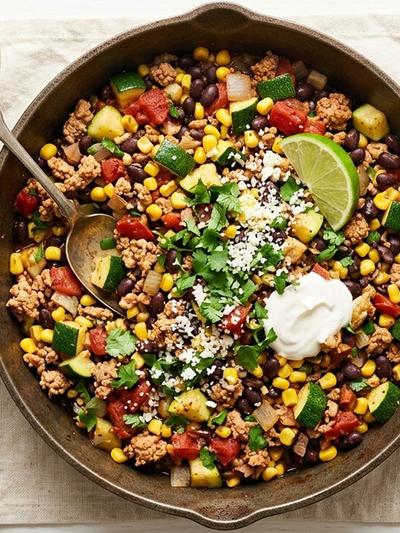
Each serving of this Italian antipasto bowl delivers 36 grams of protein from a combination of lean ground turkey and fresh mozzarella, with just 355 calories. The artichoke hearts and arugula add potassium and folate, while cherry tomatoes contribute lycopene and vitamin C. This is a nutritionally dense bowl that requires zero stovetop time at the point of assembly — the turkey is pre-cooked, cooled, and ready to build into a satisfying cold lunch.
The flavor profile here borrows from the Italian antipasto tradition: peppery arugula, sweet balsamic, briny artichoke hearts, and creamy mozzarella pearls. Italian-seasoned turkey crumbles tie everything together with familiar dried herb flavors — oregano, basil, and a touch of garlic. The contrast between the warm-spiced meat, cool fresh vegetables, and tangy dressing makes every bite interesting without being heavy.
For GLP-1 users, cold bowls like this solve a real problem. When your appetite is suppressed and standing over a hot stove feels unappealing, having a protein-rich meal you can pull from the fridge and eat immediately means you actually eat. The small, dense portions are satisfying without overwhelming a reduced appetite, and cold food tends to be easier to tolerate during periods of GLP-1-related nausea.
Why This Works on GLP-1
With 36 grams of protein per serving, this bowl provides roughly 50 percent of the daily protein target most clinicians recommend for GLP-1 patients. Maintaining adequate protein intake is critical during GLP-1-assisted weight loss because the body will break down muscle tissue for energy if dietary protein falls short. Ground turkey is one of the most efficient protein sources available — 93% lean turkey delivers about 21 grams of protein per 100 grams of cooked meat with modest fat. Paired with mozzarella, you reach a protein level that supports muscle preservation in a single sitting.
The 4 grams of fiber per serving comes from artichoke hearts and arugula — gentle, soluble-fiber-rich sources that are unlikely to cause the bloating or gas that higher-fiber options like raw broccoli or large bean portions can trigger. This matters because GLP-1 medications such as Wegovy and Zepbound slow gastric emptying, and foods that ferment aggressively in the gut can amplify discomfort.
The fat content sits at 17 grams per serving, primarily from olive oil and mozzarella — sources rich in monounsaturated fats and calcium respectively. This is moderate enough to avoid the heavy, sluggish feeling that high-fat meals can cause on GLP-1 medications, while providing enough fat for satiety and fat-soluble vitamin absorption.
Ingredients (serves 2)
For the Italian turkey crumbles:
- 10 oz (280g) 93% lean ground turkey
- 1 teaspoon dried Italian seasoning (oregano, basil, thyme blend)
- 1/2 teaspoon garlic powder
- 1/4 teaspoon fine sea salt
- 1/4 teaspoon black pepper
- cooking spray or 1/2 teaspoon olive oil for the pan
For the balsamic dressing:
- 2 teaspoons extra-virgin olive oil
- 1 1/2 tablespoons balsamic vinegar
- 1 teaspoon Dijon mustard
- 1 small clove garlic, minced or grated
- pinch of salt and pepper
For the bowl assembly:
- 2 cups (40g) baby arugula
- 1 cup (150g) cherry tomatoes, halved
- 1/2 cup (70g) marinated artichoke hearts, drained and quartered
- 2 oz (55g) fresh mozzarella pearls (ciliegine), halved
- 2 tablespoons (15g) thinly sliced red onion
- 6–8 fresh basil leaves, torn
Instructions
Cook and cool the turkey (done ahead):
- Heat a nonstick skillet over medium-high heat and add a light coating of cooking spray or 1/2 teaspoon olive oil. Add the ground turkey and break it into small crumbles using a wooden spoon or spatula. Smaller crumbles cool faster and distribute more evenly through the bowl.
- Season the turkey with Italian seasoning, garlic powder, salt, and pepper while it cooks. Stir frequently for 6–7 minutes until the turkey is cooked through with no pink remaining and the crumbles are lightly golden.
- Transfer the cooked turkey to a plate and spread it out so it cools quickly. Once it reaches room temperature (about 15 minutes), transfer to an airtight container and refrigerate. The turkey can be cooked up to 4 days in advance.
Make the balsamic dressing:
- Whisk together the olive oil, balsamic vinegar, Dijon mustard, minced garlic, salt, and pepper in a small bowl or jar. This dressing keeps refrigerated for up to a week, so you can double or triple the batch for multiple meals.
Assemble the bowls (no-cook):
- Divide the arugula between two bowls as the base layer. Arugula wilts less than spinach under toppings, so it holds up well even if you assemble the bowl 30 minutes before eating.
- Arrange the chilled turkey crumbles, halved cherry tomatoes, quartered artichoke hearts, and mozzarella pearls over the arugula in sections — keeping ingredients grouped rather than tossed makes the bowl more visually appealing and lets you control the ratio in each bite.
- Scatter the sliced red onion and torn basil leaves on top. Drizzle with the balsamic dressing just before eating. Toss lightly or eat in composed bites — both approaches work.
Nutrition per Serving
| Nutrient | Amount (approx.) |
|---|---|
| Calories | ~355 kcal |
| Protein | ~36g |
| Fat | ~17g |
| Carbohydrates | ~15g |
| Fiber | ~4g |
Based on 93% lean ground turkey, marinated artichoke hearts drained of oil, and fresh mozzarella pearls. Using part-skim mozzarella would reduce fat by approximately 2g per serving.
Practical Notes
Cook the turkey on your prep day. The only cooking this recipe requires happens once, ahead of time. Cook a large batch of Italian-seasoned turkey crumbles on Sunday and you have enough protein for four bowls through midweek. Spread cooked turkey on a sheet pan to cool rapidly before refrigerating — this prevents the condensation that makes refrigerated meat soggy.
Pack it as a layered lunch container. To take this to work, layer it in a wide-mouth container: dressing on the bottom, turkey and toppings in the middle, arugula on top. Flip and shake when you are ready to eat. This keeps the arugula crisp and prevents it from wilting under the weight of the toppings.
Start with a half portion if your appetite is very low. This recipe divides cleanly into smaller servings. A half portion still delivers 18 grams of protein — enough to count as a meaningful meal on low-appetite days. Eat the other half within a few hours or save it for the next day.
Swap the mozzarella if dairy is a problem. Some GLP-1 users find that dairy worsens nausea or bloating. Replace the mozzarella with 2 tablespoons of toasted pine nuts or an equal portion of diced avocado. You will trade some protein for healthy fats, but the bowl remains nutritionally strong thanks to the turkey base.
Add a grain layer for more energy. If you need more carbohydrates for an active day, add 1/3 cup of cooked farro, orzo, or quinoa beneath the arugula. This adds roughly 70 calories and 15 grams of carbohydrates per serving without meaningfully changing the prep complexity, since the grain can also be batch-cooked in advance.
Frequently Asked Questions
Can I eat this bowl if I am experiencing nausea on GLP-1 medication?
Can I make this bowl with chicken breast instead of ground turkey?
How long does the assembled bowl last in the fridge?
What if I can only eat a very small amount in the early weeks of GLP-1 treatment?
Do I need to use marinated artichoke hearts, or can I use canned plain ones?
This article provides general food and nutrition guidance only. It does not constitute medical advice. Always consult your healthcare provider regarding your GLP-1 medication and individual nutritional needs.