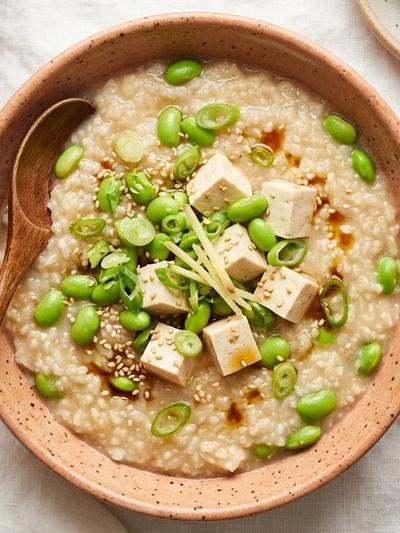
Each serving of this Korean-inspired tofu scramble delivers 29 grams of complete plant-based protein from a combination of extra-firm tofu and shelled edamame. That protein pairing covers all essential amino acids — something neither ingredient achieves as reliably on its own — while keeping the calorie count under 380 per bowl. With 8 grams of fiber from edamame, shiitake mushrooms, spinach, and brown rice, these bowls provide the kind of morning nutrition that sustains energy well into the afternoon without digestive strain.
Gochujang, the fermented Korean chili paste, does the heavy lifting on flavor. Its deep savory-sweet warmth transforms plain crumbled tofu into something rich and satisfying, with just enough gentle heat to wake up your palate without overwhelming a sensitive stomach. Sautéed shiitake mushrooms bring a meaty, umami-rich depth alongside the scramble, and quick-pickled radishes add a bright, vinegary crunch that cuts through every bite. A final sprinkle of toasted sesame seeds and sliced scallions ties it all together.
For anyone on GLP-1 medication, this recipe eliminates the most common weekday breakfast failure point: the combination of zero appetite and zero motivation to cook at 7 a.m. Prep all four bowls on a Sunday afternoon in about 35 minutes, then simply reheat one each morning in under three minutes. The soft textures and moderate spice level are gentle on digestion, and the portions feel satisfying without the heaviness that triggers post-meal nausea.
Why This Works on GLP-1
At 29 grams of protein per serving, these bowls cover roughly half the daily minimum most healthcare providers recommend during active weight loss on Mounjaro or Zepbound. Preserving lean muscle tissue is one of the most critical — and most overlooked — challenges during GLP-1-assisted weight loss. When calorie intake drops significantly, the body can break down muscle for energy unless it receives adequate protein at regular intervals. The tofu-edamame combination provides a strong leucine profile, the branched-chain amino acid most directly responsible for triggering muscle protein synthesis, making it an effective plant-based alternative to egg or dairy breakfasts.
The 8 grams of fiber per bowl come from four distinct sources: edamame, brown rice, shiitake mushrooms, and baby spinach. This variety matters because it delivers a balanced mix of soluble and insoluble fiber that supports regular digestion without the bloating risk that comes from loading up on a single high-fiber food. Since GLP-1 medications slow gastric emptying, overwhelming the stomach with dense fiber concentrates — like raw broccoli or high-fiber wraps — often creates discomfort. The moderate, distributed fiber in these bowls works with your medication rather than against it.
The moderate calorie count of 380 per serving means you get substantial nutrition without the overstuffed feeling that GLP-1 users learn to dread. Brown rice provides sustained-release carbohydrates with a lower glycemic response than white rice, complementing the blood sugar regulation your medication already provides. The fermented ingredients — gochujang and pickled radish — support gut health through compounds produced during the fermentation process, a practical bonus that requires no extra effort.
Ingredients (serves 4)
For the gochujang tofu scramble:
- 1 block (14 oz / 397g) extra-firm tofu, pressed and drained
- 2 cups (310g) shelled edamame, thawed if frozen
- 2 tablespoons (36g) gochujang
- 2 tablespoons (30ml) low-sodium soy sauce
- 2 teaspoons (9ml) toasted sesame oil
- 3 cloves garlic, minced
- 1 tablespoon (6g) fresh ginger, grated
- ½ teaspoon ground turmeric
- 4 cups (120g) baby spinach
For the sautéed mushrooms:
- 8 oz (227g) shiitake mushrooms, stems removed, sliced
- 1 teaspoon (5ml) low-sodium soy sauce
- ½ teaspoon toasted sesame oil
For the quick-pickled radish:
- 6 medium radishes (80g), thinly sliced
- 2 tablespoons (30ml) rice vinegar
- 1 teaspoon (5g) sugar
- ¼ teaspoon fine sea salt
For assembly:
- 1 cup (185g) cooked brown rice (from ½ cup / 95g dry)
- 2 scallions, thinly sliced
- 1 tablespoon (9g) toasted sesame seeds
- Optional: nori strips, sriracha, or lime wedges
Instructions
Pickle the radishes (5 minutes plus resting):
- Combine the rice vinegar, sugar, and salt in a small bowl and stir until the sugar dissolves completely.
- Add the thinly sliced radishes and toss to coat. Set aside while you prepare the remaining components — they will soften and absorb flavor as you cook, and taste even better the next day.
Cook the brown rice:
- If you haven't already cooked your rice, combine ½ cup dry brown rice with 1 cup water in a small saucepan. Bring to a boil, reduce to low heat, cover, and cook for 40 minutes until tender. Alternatively, use pre-cooked or microwavable brown rice to skip this step entirely — the time savings are significant for a Sunday prep session.
Sauté the mushrooms (5 minutes):
- Heat ½ teaspoon sesame oil in a large nonstick skillet over medium-high heat. Add the sliced shiitake mushrooms in a single layer and cook undisturbed for 2 minutes — this contact time builds deep, golden browning and concentrates their umami.
- Flip, drizzle in 1 teaspoon soy sauce, and cook another 2 minutes until tender with caramelized edges. Transfer to a plate and set aside.
Make the gochujang tofu scramble (12 minutes):
- Crumble the pressed tofu into the same skillet with your hands, breaking it into uneven pieces. Some should be small like scrambled egg curds, others slightly larger — the mix of textures keeps each bite interesting across four days of eating.
- Cook the crumbled tofu over medium-high heat for 5 minutes, stirring occasionally, until the excess moisture evaporates and the edges begin to turn golden. This drying and browning step is essential — wet tofu won't absorb the gochujang properly.
- Push the tofu to one side of the skillet. Add the remaining 2 teaspoons sesame oil to the cleared side, then add the garlic and ginger. Cook for 30 seconds until fragrant, then stir everything together.
- Add the gochujang, soy sauce, and turmeric. Toss the tofu thoroughly to coat every piece — the gochujang will darken slightly as it hits the hot pan, developing a richer, more complex flavor.
- Fold in the thawed edamame and cook for 2 minutes until heated through and glossy with the sauce.
- Add the baby spinach in two handfuls, stirring after each addition until just wilted, about 1 minute total. Remove from heat immediately to prevent overcooking.
Assemble the meal prep bowls (5 minutes):
- Divide the cooked brown rice evenly among four airtight containers, spreading it into a thin layer on one side of each container — about ¼ cup per bowl.
- Spoon the gochujang tofu-edamame scramble alongside the rice, filling most of the container.
- Arrange the sautéed mushrooms on top or beside the scramble.
- Drain the pickled radishes and tuck a small pile into each bowl. Sprinkle toasted sesame seeds over everything.
- Store sliced scallions in a separate small bag or container — adding them fresh after reheating preserves their color and sharp, bright flavor.
Nutrition per Serving
| Nutrient | Amount (approx.) |
|---|---|
| Calories | ~380 kcal |
| Protein | ~29g |
| Fat | ~17g |
| Carbohydrates | ~31g |
| Fiber | ~8g |
Nutrition estimated using USDA values for extra-firm tofu (calcium sulfate), frozen shelled edamame, cooked brown rice, and raw shiitake mushrooms. Actual values may vary by brand and preparation method.
Practical Notes
Reheating for the best texture. Microwave each bowl for 2 to 3 minutes with a damp paper towel draped loosely over the top — this prevents the tofu from drying out at the edges. Stir once halfway through for even heating. The pickled radish stays pleasantly crisp even after days of refrigeration, actually improving as the vinegar penetrates deeper. Add the reserved scallions after reheating for fresh color and bite.
Pressing the tofu makes or breaks this recipe. Wrap the block in a clean kitchen towel, place it on a plate, and set a heavy pan or cutting board on top for at least 15 minutes. Well-pressed tofu releases less steam in the skillet, browns faster, and absorbs the gochujang far more deeply. If you own a tofu press, use it while you prep the other ingredients — the hands-free approach fits naturally into the prep flow.
Storage and shelf life. These bowls keep well in the refrigerator for up to 4 days, covering Sunday night through Thursday morning. The spinach will soften further in storage, which is completely normal and doesn't affect flavor or nutrition. For longer storage, freeze individual bowls without the pickled radish for up to 2 months — make a fresh batch of pickled radish each week since it takes only 5 minutes.
Adjusting the spice level for medication sensitivity. Gochujang varies widely by brand in both heat and sweetness. If you notice that spice triggers nausea or reflux on your GLP-1 medication, start with just 1½ tablespoons and taste before adding the rest. For an even milder version, mix 1 tablespoon gochujang with 1 tablespoon white miso paste — you keep the fermented depth while cutting the chili heat roughly in half.
Swapping the grain base for different calorie targets. Quinoa works as a direct substitute for brown rice and adds about 3 extra grams of protein per serving. For an even lighter option during early GLP-1 phases when appetite is at its lowest, use riced cauliflower instead — it drops the calorie count to roughly 320 per bowl while keeping the protein virtually unchanged. Either swap works without altering the prep timeline.
Frequently Asked Questions
How do I eat this on mornings when my GLP-1 medication kills my appetite?
Can I use tempeh or lentils instead of tofu?
Do these bowls freeze well, and how should I thaw them?
I'm in my first weeks on Wegovy and can barely finish any meal. How should I adapt the portions?
Where do I find gochujang, and does the brand matter?
This article provides general food and nutrition guidance only. It does not constitute medical advice. Always consult your healthcare provider regarding your GLP-1 medication and individual nutritional needs.