This sheet pan dinner packs 38 grams of protein into every serving while staying under 400 calories. Top sirloin provides one of the best protein-to-calorie ratios of any beef cut, and roasting it alongside Brussels sprouts and sweet potato on a single pan means you get a complete, macro-balanced meal with almost no cleanup. Each plate delivers a solid hit of B12, iron, and zinc from the beef, plus vitamin C and fiber from the vegetables.
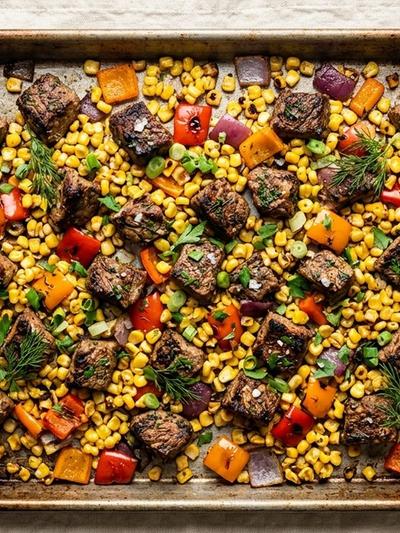
Coarsely cracked black pepper forms a savory crust on the sirloin bites as they roast at high heat, creating caramelized edges that taste like a steakhouse dinner. The Brussels sprouts char and crisp where they touch the pan, their slight bitterness balanced by the natural sweetness of roasted sweet potato cubes. A simple seasoning blend of smoked paprika, garlic powder, and a touch of onion powder ties everything together without overwhelming the natural flavors of good beef.
For GLP-1 users, this recipe hits the mark on several levels. The portions feel satisfying because roasted vegetables take on concentrated flavor, so a smaller plate still delivers bold taste. The staggered cooking method — vegetables first, then beef — means everything finishes at the same time without any piece being overcooked. And because the entire meal roasts on one sheet pan, there is no barrier to making this on a weeknight when energy and appetite are both limited.
Why This Works on GLP-1
Each serving of this sheet pan dinner provides roughly 38 grams of complete protein from top sirloin steak, which is critical for preserving lean muscle mass during the weight loss that typically accompanies GLP-1 medications. Muscle loss is one of the less-discussed side effects of rapid weight loss on medications like Mounjaro and Wegovy, and hitting a protein target of 25 to 40 grams per meal is one of the most effective ways to counteract it. Top sirloin is an ideal choice because it delivers that protein with only about 8 grams of fat per serving before cooking oil — far leaner than ribeye or chuck, which can sit heavy in a stomach where gastric emptying is already slowed.
The 6 grams of fiber per serving come from a combination of Brussels sprouts and sweet potato, both of which are gentle enough for most GLP-1 users when roasted. Roasting breaks down some of the tougher plant fibers, making these vegetables easier to digest than their raw or steamed counterparts. The moderate fiber content supports steady blood sugar without the bloating that higher-fiber meals can cause when appetite is already suppressed.
Iron and B12 from beef are nutrients that GLP-1 users sometimes fall short on when overall food intake decreases. A single serving of this recipe provides roughly 40 percent of daily iron needs and well over 100 percent of B12, both of which support energy levels and red blood cell production. The vitamin C in Brussels sprouts also enhances iron absorption, making these nutrients work together efficiently.
Ingredients (serves 4)
For the sirloin:
- 1½ lbs (680g) top sirloin steak, trimmed and cut into 1-inch (2.5cm) cubes
- 1½ tsp coarsely cracked black pepper
- 1 tsp smoked paprika
- ¾ tsp garlic powder
- ½ tsp onion powder
- ½ tsp fine sea salt
- 1 tsp olive oil
For the vegetables:
- 1 lb (450g) Brussels sprouts, trimmed and halved
- 1 medium sweet potato, about 10 oz (280g), peeled and cut into ¾-inch (2cm) cubes
- 1 medium red onion, cut into thin wedges
- 2 tsp olive oil
- ¼ tsp fine sea salt
- ⅛ tsp black pepper
To finish:
- 1 tbsp fresh thyme leaves (or 1 tsp dried thyme)
- 1 small lemon, cut into wedges for serving
Instructions
Prepare the pan and vegetables:
- Position a rack in the center of the oven and preheat to 425°F (220°C). Line a large rimmed sheet pan (18×13 inches) with parchment paper. The parchment prevents sticking without adding extra fat, and it makes cleanup almost effortless.
- In a large bowl, toss the halved Brussels sprouts, sweet potato cubes, and red onion wedges with the 2 teaspoons of olive oil, salt, and pepper until evenly coated. Spread them in a single layer across the sheet pan, leaving a gap in the center — the vegetables need space to roast rather than steam, which is what gives them that crisp, caramelized finish.
- Roast the vegetables for 15 minutes. During this head start, the sweet potato cubes begin to soften and the Brussels sprouts start to brown. Starting the vegetables first solves the biggest sheet pan timing problem: dense root vegetables and quick-cooking steak need different amounts of heat.
Season and add the sirloin:
- While the vegetables roast, pat the sirloin cubes dry with paper towels. Dry surfaces brown better — moisture on the surface creates steam instead of a sear. In a bowl, combine the cracked black pepper, smoked paprika, garlic powder, onion powder, and salt. Toss the sirloin cubes with the 1 teaspoon of olive oil, then add the spice mixture and toss until every piece is evenly coated.
- Remove the pan from the oven. Push the partially roasted vegetables toward the edges and scatter the seasoned sirloin cubes in the center of the pan in a single layer. Placing the beef in the center, where heat is most intense, helps it develop a crust quickly.
- Return the pan to the oven and roast for 10 to 12 minutes for medium doneness (the beef should register about 135°F / 57°C on an instant-read thermometer and will carry over a few degrees while resting). For well-done, roast 14 to 15 minutes.
Rest and serve:
- Remove the pan from the oven and scatter the fresh thyme leaves over everything. Let the entire pan rest for 5 minutes — this allows the juices in the sirloin to redistribute, so they stay in the meat rather than running out onto the plate. Resting is especially important with lean cuts like sirloin, which dry out quickly if sliced or served immediately.
- Divide evenly among four plates. Squeeze a lemon wedge over each serving just before eating — the acidity brightens the roasted flavors and helps cut through the richness of the beef.
Nutrition per Serving
| Nutrient | Amount (approx.) |
|---|---|
| Calories | ~382 kcal |
| Protein | ~38g |
| Fat | ~12g |
| Carbohydrates | ~24g |
| Fiber | ~6g |
Estimates are based on USDA values for trimmed top sirloin steak, raw Brussels sprouts, raw sweet potato, and measured olive oil. Actual values will vary depending on the specific cut of sirloin and how much fat is trimmed before cooking.
Practical Notes
This recipe meal preps well for 3 to 4 days. Store cooled portions in airtight containers in the refrigerator. Reheat in a 375°F (190°C) oven for 8 to 10 minutes or in a skillet over medium heat. Avoid the microwave if possible — it tends to make the sirloin rubbery and the Brussels sprouts soggy.
Swap the sirloin for flank steak or eye of round if your grocery store has a better deal. Flank steak has a slightly more pronounced grain, so slice it against the grain before cubing. Eye of round is even leaner, but it dries out faster, so pull it at 130°F (54°C) and let the carryover heat finish the job.
If your appetite is very small on GLP-1 medication, plate a half portion and save the rest. This recipe is designed so that even a half serving still provides about 19 grams of protein, which is a meaningful amount. Eat the protein first while your appetite is strongest, then the vegetables.
Cut the sweet potato cubes uniformly for even cooking. Pieces that are too large will still be hard in the center when the beef is done. Aim for ¾-inch cubes — a sharp chef's knife and a stable cutting board make this quick work. If your sweet potatoes are particularly thick, you may need to add 2 to 3 minutes to the initial vegetable roasting time.
Frozen Brussels sprouts work in a pinch but require one extra step. Thaw them completely and press them dry between clean towels before tossing with oil. Excess moisture prevents browning and can make the pan steam instead of roast. Fresh sprouts give better texture, but frozen ones will still produce a solid meal when time or availability is limited.
Frequently Asked Questions
Is this recipe easy to digest on Zepbound or other GLP-1 medications?
Can I make this recipe dairy-free or with a sauce on the side?
How long does this keep in the refrigerator, and can I freeze it?
What if I can only eat a very small amount right now on my GLP-1 medication?
Why do the vegetables go on the pan before the beef?
This article provides general food and nutrition guidance only. It does not constitute medical advice. Always consult your healthcare provider regarding your GLP-1 medication and individual nutritional needs.