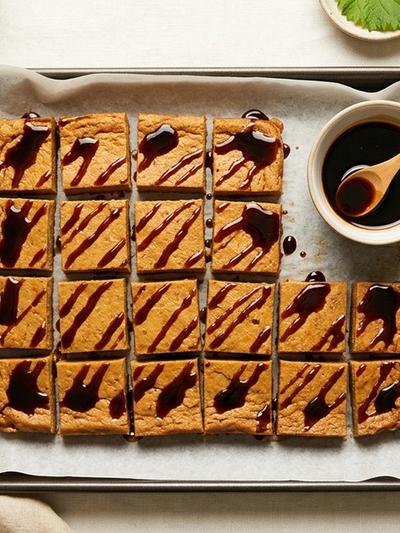
Each serving of these salted maple chickpea blondies delivers 26 grams of plant-based protein from chickpeas, hemp hearts, chia seeds, and plant protein powder, backed by 9 grams of fiber and only 365 calories. The chickpea base creates a dense, fudgy interior that genuinely mimics the chew of a traditional blondie while adding meaningful protein and fiber that conventional desserts simply cannot match. Pure maple syrup provides a clean sweetness without refined sugar, and flaky sea salt on top creates the kind of sweet-salty finish that turns a responsible dessert into one you actually crave.
The flavor profile is unmistakably American: warm cinnamon, toasted pecans, real maple syrup, and vanilla layered over a buttery almond-forward base. Blending the chickpeas completely smooth eliminates any bean flavor, leaving behind a rich, almost caramel-like texture that the almond butter deepens. Toasted pecan pieces shatter against the chewy interior, and the flaky salt crystals dissolve slowly on your tongue, brightening every bite with bursts of contrast.
This sheet-pan format produces eight bars in under forty minutes with no individual shaping, no multiple baking rounds, and minimal cleanup. For people on GLP-1 medications, a single bar or two provides a genuinely satisfying sweet course without the heavy, sluggish feeling that sugar-dense conventional desserts often trigger in a slower-emptying stomach.
Why This Works on GLP-1
Each two-bar serving provides 26 grams of plant-based protein, which is critical for preserving lean muscle mass during the weight loss that Wegovy and Mounjaro promote. The protein comes from four complementary sources — chickpeas, hemp hearts, chia seeds, and pea-rice protein powder — creating a complete amino acid profile without any animal products. Because GLP-1 receptor agonists reduce total food intake, making every calorie count nutritionally is essential, and these blondies accomplish that by turning dessert into a meaningful protein delivery system rather than empty carbohydrates.
The 9 grams of fiber per serving come from whole chickpeas, rolled oats, ground flaxseed, and chia seeds — predominantly soluble fiber sources that work with, rather than against, the delayed gastric emptying that GLP-1 medications produce. This fiber slows glucose absorption and helps prevent the blood sugar spikes and subsequent crashes that can lead to cravings between meals. Because the bars use moderate maple syrup as the only sweetener, the glycemic response stays significantly lower than comparable baked treats made with refined sugar or corn syrup.
At 365 calories and 16 grams of fat per serving, these blondies fit comfortably within the reduced calorie budgets most GLP-1 users follow. The fat comes entirely from whole-food sources — almond butter, hemp hearts, chia seeds, and pecans — providing vitamin E, magnesium, and omega-3 fatty acids that support cardiovascular health during active weight loss.
Ingredients (serves 4, makes 8 bars)
For the chickpea blondie batter:
- 1 can (15 oz / 425g) chickpeas, drained and rinsed
- 1 cup (90g) vanilla plant-based protein powder
- 2 tablespoons (32g) natural almond butter, unsweetened
- 3 tablespoons (45ml) pure maple syrup
- 1 tablespoon (7g) ground flaxseed
- 3 tablespoons (45ml) water
- ⅓ cup (27g) rolled oats (not instant)
- 2 tablespoons (20g) hemp hearts
- 1 tablespoon (12g) chia seeds
- 1 teaspoon vanilla extract
- 1 teaspoon ground cinnamon
- ½ teaspoon baking powder
- ¼ teaspoon baking soda
- ¼ teaspoon fine sea salt
For the pecan topping:
- 3 tablespoons (21g) pecans, roughly chopped
- 1 tablespoon (15ml) pure maple syrup
- Flaky sea salt (Maldon or similar)
Instructions
Prepare the flax egg and preheat:
- Stir the ground flaxseed and water together in a small bowl. Set aside for 5 minutes until the mixture thickens into a gel — this replaces egg as the binder, giving the bars structure without any animal products.
- Preheat your oven to 350°F (175°C). Line a rimmed sheet pan with parchment paper.
Blend the batter:
- Add the drained and rinsed chickpeas to a food processor. Blend for a full 60 seconds until completely smooth, scraping down the sides at least once. Any remaining chickpea chunks will create a grainy texture instead of the fudgy interior you want, so take the time to process them thoroughly.
- Add the protein powder, almond butter, maple syrup, prepared flax egg, rolled oats, hemp hearts, chia seeds, vanilla extract, cinnamon, baking powder, baking soda, and salt. Pulse 15 to 20 times, then blend continuously for 30 seconds until a thick, uniform batter forms. The consistency should resemble dense cookie dough — stiff enough to hold its shape when spread, not pourable.
Shape and top:
- Scrape the batter onto the prepared sheet pan. Using a spatula or slightly damp hands, spread it into a compact 8 × 8 inch (20 × 20 cm) rectangle, about ¾ inch (2 cm) thick. Even thickness is important — thin edges will overbake and dry out while thick centers stay underdone.
- Scatter the chopped pecans evenly over the surface and press them gently into the batter so they anchor during baking rather than rolling off.
Bake and finish:
- Bake for 20 to 22 minutes until the edges turn golden brown and the center feels firm when touched lightly. The blondies will still appear slightly soft in the middle — this is correct. They firm up substantially as they cool. Overbaking dries out the protein powder and produces a chalky, crumbly texture.
- Remove from the oven immediately. Drizzle the remaining tablespoon of maple syrup evenly over the warm surface and sprinkle generously with flaky sea salt. The salt crystals adhere to the tacky maple, creating a permanent crust that stays crunchy even after refrigeration.
- Cool on the pan for at least 10 minutes before cutting into 8 equal bars. The bars slice cleanest at room temperature or after chilling in the refrigerator for 30 minutes.
Nutrition per Serving
| Nutrient | Amount (approx.) |
|---|---|
| Calories | ~365 kcal |
| Protein | ~26g |
| Fat | ~16g |
| Carbohydrates | ~34g |
| Fiber | ~9g |
Estimated using USDA values for canned chickpeas, generic vanilla plant-based protein powder (pea-rice blend, approximately 20g protein per 30g scoop), natural almond butter, hemp hearts, chia seeds, and raw pecans. Actual values vary by protein powder brand.
Practical Notes
Storage and meal prep. Store bars in an airtight container in the refrigerator for up to 5 days. They actually taste better cold — the texture firms into a denser, fudgier chew that many people prefer. For longer storage, wrap individual bars in parchment paper and freeze in a zip-top bag for up to 2 months. Thaw in the refrigerator overnight.
Protein powder selection matters. Not all plant-based protein powders behave the same way in baking. Pea-rice blends work best because they hold moisture and create a smooth crumb. Pure pea protein isolate can turn gritty. Avoid protein powders sweetened primarily with stevia — they develop a bitter aftertaste when baked. Brands sweetened with monk fruit or a small amount of coconut sugar tend to perform better at oven temperatures.
For smaller appetites on Zepbound or similar medications. Cut the batch into 12 pieces instead of 8. Each piece still provides about 17 grams of protein, which is a substantial amount for a snack-sized dessert. Many GLP-1 users find that a single smaller bar with a cup of herbal tea makes a fully satisfying end to a meal.
The flaky salt is not optional. The sweet-salty contrast is what transforms these from merely functional protein bars into something that genuinely satisfies a dessert craving. Flaky crystals work better than fine table salt because they dissolve slowly on the tongue, creating distinct bursts of salinity against the maple sweetness rather than uniform saltiness throughout.
Nut-free adaptation. Replace the almond butter with sunflower seed butter in the same amount and swap the pecans for toasted pumpkin seeds. The flavor shifts slightly toward earthier territory, but the protein and fiber content remain nearly identical. Both substitutions keep the recipe free from tree nuts and peanuts.
Frequently Asked Questions
Can I eat these blondies on days when my GLP-1 medication suppresses my appetite strongly?
What can I substitute for the plant-based protein powder?
How should I store these bars for weekly meal prep?
I am in the first weeks of starting Ozempic and can only eat very small amounts. How should I adapt this recipe?
Why do my chickpea blondies come out grainy instead of fudgy?
This article provides general food and nutrition guidance only. It does not constitute medical advice. Always consult your healthcare provider regarding your GLP-1 medication and individual nutritional needs.