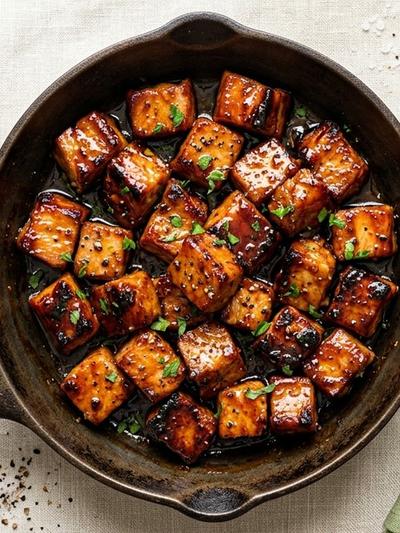
Each serving of these skillet egg bites delivers 26 grams of protein from a combination of whole eggs, egg whites, and low-fat cottage cheese. The cottage cheese melts into the egg mixture as it cooks, creating pockets of creamy richness while contributing nearly 9 grams of protein per serving on its own. At just 240 calories, these bites hit the sweet spot between substantial protein content and snack-appropriate portions.
Everything bagel seasoning transforms simple eggs into something you actually look forward to eating. The toasted sesame and poppy seeds create a nutty crunch on the outside of each bite, while dried garlic and onion add savory depth throughout. Diced red bell pepper brings a mild sweetness and color contrast, and fresh chives tie the whole flavor profile together with a clean, oniony finish.
For anyone managing portions on GLP-1 medication, these bites solve a real problem: getting enough protein between meals without the heaviness of a full dish. They cook in a single nonstick skillet in about 12 minutes, they hold their shape for easy grab-and-go eating, and they taste just as good at room temperature as they do warm from the pan.
Why This Works on GLP-1
Muscle preservation is one of the most important nutritional priorities during GLP-1-assisted weight loss, and adequate protein at every eating occasion helps protect lean mass. These egg bites provide 26 grams of complete protein per serving, which represents a meaningful contribution toward the 1.0 to 1.2 grams of protein per kilogram of body weight that many dietitians recommend for people taking Mounjaro or similar GLP-1 medications. The combination of whole eggs and egg whites offers all essential amino acids with a high biological value, meaning your body absorbs and uses the protein efficiently. Cottage cheese adds casein protein, which digests more slowly and extends the feeling of fullness between meals.
The light texture of these bites makes them easier to tolerate than denser snacks, particularly if you experience the reduced gastric motility that GLP-1 medications can cause. Bell peppers contribute a modest amount of fiber along with vitamin C, which supports iron absorption from the eggs. Because the recipe uses minimal added fat, relying primarily on a thin coating of olive oil or cooking spray, it avoids the heavy, greasy quality that can trigger nausea on these medications.
Eggs are also one of the best dietary sources of choline, a nutrient that supports liver function and fat metabolism. Each serving provides roughly 40 percent of the daily adequate intake for choline. The B12 in eggs and cottage cheese supports energy metabolism, which matters when caloric intake is naturally lower on Wegovy or other GLP-1 therapies.
Ingredients (serves 2)
For the egg bites:
- 3 large eggs
- 4 large egg whites (or 1/2 cup / 120ml liquid egg whites from carton)
- 2/3 cup (150g) low-fat cottage cheese (2% milkfat)
- 2 tablespoons everything bagel seasoning, divided
- 1/4 cup (40g) red bell pepper, finely diced
- 2 tablespoons fresh chives, chopped, plus more for garnish
- 1/4 teaspoon smoked paprika
- 1 teaspoon olive oil or cooking spray
Instructions
Prepare the batter:
- Crack the whole eggs into a medium mixing bowl and add the egg whites. Whisk vigorously until the whites and yolks are fully combined and slightly frothy, about 30 seconds. The aeration helps the bites puff slightly in the pan.
- Add the cottage cheese and stir to combine. Small curds will remain visible throughout the batter, and that is exactly what you want. They melt into creamy pockets as the bites cook rather than creating a uniform texture.
- Fold in 1 1/2 tablespoons of the everything bagel seasoning, the diced red bell pepper, chives, and smoked paprika. Stir gently until the vegetables and seasoning are evenly distributed. Reserve the remaining 1/2 tablespoon of seasoning for finishing.
Cook the bites:
- Heat a large nonstick skillet over medium heat. Add the olive oil and swirl to coat, or apply a generous layer of cooking spray. Medium heat is important here because egg whites toughen and turn rubbery over high heat, and the sesame seeds in the seasoning will burn.
- Spoon roughly 3 tablespoons of batter per bite into the skillet, spacing them about 1 inch apart. You should fit 4 bites per batch. Use the back of the spoon to gently flatten each mound into a round about 2 1/2 inches across.
- Cook undisturbed for 2 1/2 to 3 minutes until the bottoms are golden brown and the edges look set. The cottage cheese curds will begin to melt and the surface will transition from glossy to matte.
- Flip each bite carefully with a thin spatula. Cook for another 2 to 2 1/2 minutes on the second side until golden and cooked through. The center should feel firm when pressed lightly, not soft or liquid.
- Transfer to a plate and repeat with the remaining batter, applying a fresh coat of cooking spray if needed. You should get 8 bites total, 4 per serving.
Finish and serve:
- Sprinkle the reserved 1/2 tablespoon of everything bagel seasoning over the warm bites. Garnish with additional chopped chives. Serve warm, at room temperature, or chilled.
Nutrition per Serving
| Nutrient | Amount (approx.) |
|---|---|
| Calories | ~240 kcal |
| Protein | ~26g |
| Fat | ~12g |
| Carbohydrates | ~6g |
| Fiber | ~1g |
Estimates based on large eggs, standard liquid egg whites, and 2% milkfat cottage cheese. Using full-fat cottage cheese will add approximately 30 calories and 2 grams of fat per serving.
Practical Notes
Carton egg whites save time and reduce waste. Separating 4 eggs to get whites is messy and leaves you with yolks to use up. A carton of liquid egg whites (available at most grocery stores near the eggs) lets you pour exactly 1/2 cup and put the rest back. The quality and protein content are identical to fresh-separated whites.
These keep well for midweek snacking. Store cooked bites in an airtight container in the refrigerator for up to 4 days. Eat them cold straight from the fridge, or reheat for 20 to 30 seconds in the microwave. They also work well tucked into a small container with an ice pack for an office or travel snack.
Eat slowly and stop when satisfied. On GLP-1 medications, your appetite signals arrive sooner and stronger than before. You may find that 2 or 3 bites are enough, even though a full serving is 4. Start with half the serving and wait 10 minutes before deciding whether you want more. There is no requirement to finish everything on the plate.
Customize the seasoning blend if needed. If you do not have store-bought everything bagel seasoning, make your own by combining 1 teaspoon each of white sesame seeds, black sesame seeds (or more white), poppy seeds, dried minced garlic, and dried minced onion with 1/2 teaspoon of flaky sea salt. This yields about 2 tablespoons.
Swap the bell pepper for other gentle vegetables. Finely diced zucchini, baby spinach, or roasted red peppers from a jar all work well in this recipe. Avoid raw onion or cruciferous vegetables like broccoli if you are prone to bloating, since GLP-1 medications already slow digestion.
Frequently Asked Questions
Will these egg bites sit well on my stomach during early GLP-1 treatment?
Can I make these dairy-free without the cottage cheese?
Can I freeze these bites for longer storage?
What if I can only eat one or two bites at a time?
Why do my bites spread too thin or fall apart when flipping?
This article provides general food and nutrition guidance only. It does not constitute medical advice. Always consult your healthcare provider regarding your GLP-1 medication and individual nutritional needs.