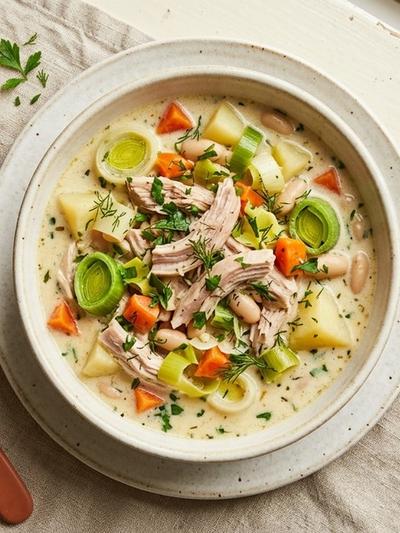
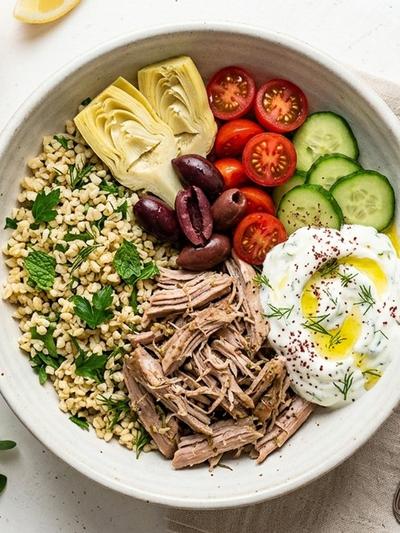
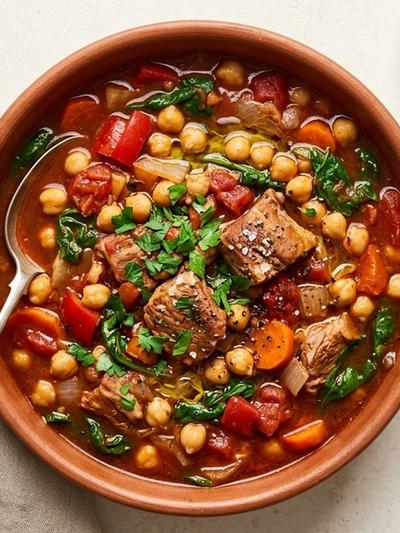
Each serving of this Greek-inspired stew delivers 37 grams of protein primarily from lean turkey breast, with an additional boost from cannellini beans that also contribute 8 grams of fiber per bowl. At just 335 calories, it provides a complete, nutrient-dense lunch without the heaviness that can make afternoons sluggish. The slow cooker does the heavy lifting, transforming simple pantry ingredients into a deeply flavored braise that tastes like it took all day to prepare.
Stifado is one of the great comfort dishes of Greek cooking, a slow-braised stew defined by its unusual combination of warm spices: cinnamon, allspice, and bay leaf layered into a rich tomato base. Whole pearl onions turn silky and sweet during the long cook, melting into the sauce while still holding their shape. The result is savory and gently aromatic, with the kind of depth you normally only get from red meat stews, achieved here with far less fat.
This recipe suits GLP-1 users particularly well because the concentrated flavor means even a modest bowl feels like a full meal. The soft-braised turkey and beans are gentle on digestion, and the stew reheats without losing quality, making it ideal for packing lunches throughout the week. Setting it up takes about fifteen minutes of hands-on work before the slow cooker handles the rest.
Why This Works on GLP-1
Each serving provides 37 grams of protein, the amount research consistently links to preserving lean muscle mass during weight loss. Turkey breast is one of the leanest protein sources available, with almost no saturated fat to slow digestion uncomfortably. For people taking Mounjaro or similar GLP-1 medications, maintaining protein intake is critical because the rapid weight loss these drugs facilitate can break down muscle tissue if protein falls short. Getting that protein in a warm, soft-textured format like this stew makes it easier to eat enough even when appetite is low.
The cannellini beans contribute both protein and soluble fiber, which slows glucose absorption and supports the blood sugar regulation that GLP-1 medications are already working to improve. At 8 grams of fiber per serving, this stew reaches meaningful fiber levels without relying on raw vegetables or bran that can cause bloating in sensitive stomachs. The beans break down slightly during the long cook, making them easier to digest than firmer preparations.
Tomatoes provide lycopene and vitamin C, while the warm spice combination of cinnamon and allspice offers mild anti-inflammatory properties. The total fat content stays at just 5 grams per serving, nearly all from a small amount of olive oil, so the stew sits lightly in the stomach. This matters for Wegovy users and others experiencing the slowed gastric emptying that GLP-1 medications cause, as high-fat meals tend to amplify nausea and discomfort.
Ingredients (serves 4)
For the stew:
- 1¼ lb (570g) boneless, skinless turkey breast, cut into 1½-inch cubes
- 1 bag (14 oz / 400g) frozen pearl onions, thawed
- 1 can (15 oz / 425g) cannellini beans, drained and rinsed
- 1 can (14.5 oz / 410g) crushed tomatoes
- 2 tablespoons tomato paste
- 2 medium carrots, peeled and diced (about ¾ cup / 100g)
- 4 cloves garlic, minced
- 1 tablespoon red wine vinegar
- 1 tablespoon extra-virgin olive oil
- 1 cinnamon stick
- 2 bay leaves
- ½ teaspoon ground allspice
- 1 teaspoon dried oregano
- ½ teaspoon freshly ground black pepper
- ¾ teaspoon fine sea salt
For serving:
- 2 tablespoons fresh flat-leaf parsley, roughly chopped
- Optional: 1 oz (28g) crumbled feta per bowl
Instructions
Season and layer the slow cooker:
Pat the turkey breast cubes dry with paper towels and season them evenly with the salt, pepper, allspice, and dried oregano. Drying the surface first helps the spices adhere and gives the meat better texture even without browning.
Drizzle the olive oil across the bottom of a 4- to 6-quart slow cooker. Spread the thawed pearl onions and diced carrots in an even layer across the bottom. The onions go on the bottom because they benefit most from the direct heat and longest cooking time, which turns them meltingly sweet.
Arrange the seasoned turkey cubes in a single layer over the onions and carrots. Scatter the minced garlic over the turkey.
Build the braising liquid:
In a small bowl, stir together the crushed tomatoes, tomato paste, and red wine vinegar until the paste dissolves. The vinegar brightens the sauce and balances the sweetness of the long-cooked onions.
Pour the tomato mixture evenly over the turkey. Nestle the cinnamon stick and bay leaves into the liquid. Do not stir. Keeping the layers intact ensures the turkey braises gently rather than boiling, which would toughen the breast meat.
Slow cook:
- Cover and cook on LOW for 6 to 7 hours or HIGH for 3 to 3½ hours. The stew is ready when the turkey shreds easily with a fork and the pearl onions are completely tender.
Finish with beans:
Add the drained cannellini beans during the last 30 minutes of cooking. Adding them late prevents them from turning to mush while still allowing them to absorb the spiced braising liquid. Stir gently to distribute.
Remove the cinnamon stick and bay leaves. Taste the broth and adjust salt if needed. The stew should be thick and saucy, not soupy. If the liquid seems thin, leave the lid off for the final 15 minutes on HIGH to reduce slightly.
Serve:
- Ladle into bowls, making sure each serving gets a generous portion of turkey, beans, and pearl onions. Scatter fresh parsley over each bowl. Add crumbled feta if desired, though the stew is complete without it.
Nutrition per Serving
| Nutrient | Amount (approx.) |
|---|---|
| Calories | ~335 kcal |
| Protein | ~37g |
| Fat | ~5g |
| Carbohydrates | ~31g |
| Fiber | ~8g |
Estimates based on boneless skinless turkey breast, canned cannellini beans, and canned crushed tomatoes. Adding the optional feta adds approximately 75 calories and 5g fat per serving.
Practical Notes
Meal prep storage. This stew refrigerates beautifully for up to five days in airtight containers, and the flavor actually deepens overnight as the spices continue to meld. Portion it into individual containers while still warm for grab-and-go lunches throughout the week.
Freezer-friendly batches. The stew freezes well for up to three months. Let it cool completely, then store in freezer-safe containers with about half an inch of headspace. Thaw overnight in the refrigerator and reheat gently on the stovetop or in the microwave, adding a splash of water if the sauce has thickened.
Use frozen pearl onions. Fresh pearl onions require blanching and peeling, which adds twenty minutes of tedious prep. Frozen pearl onions are already peeled and produce identical results in a slow cooker since the long braise eliminates any textural difference.
Turkey breast alternatives. If you can only find turkey breast tenderloins rather than a whole breast, they work perfectly. Cut them into the same 1½-inch cubes. Avoid ground turkey here because the stew relies on distinct, tender chunks of meat that hold their shape through the long braise.
Pair with something simple. A small piece of crusty bread or a quarter cup of cooked orzo per bowl rounds out the meal without overwhelming a reduced appetite. On days when hunger is especially low, the stew is satisfying enough on its own thanks to the combination of protein, beans, and the rich tomato broth.
Frequently Asked Questions
Will the turkey breast dry out in the slow cooker?
Can I use chicken breast or thighs instead of turkey?
How should I reheat this stew for packed lunches?
I'm in the first weeks of GLP-1 treatment and can barely eat half a cup at a time. How should I adjust?
Can I add potatoes or other vegetables to this stew?
This article provides general food and nutrition guidance only. It does not constitute medical advice. Always consult your healthcare provider regarding your GLP-1 medication and individual nutritional needs.