One of the less-discussed side effects of GLP-1 medications is constipation. Slowed gastric emptying and reduced food volume mean less bulk moving through the digestive tract, and for many users this becomes a persistent and uncomfortable issue. Dietary fiber is the primary non-pharmaceutical intervention — and this chia seed pudding delivers 15 grams of fiber per serving, making it one of the most effective breakfast choices a GLP-1 user can make for digestive health.
The overnight preparation format is equally important. Chia seeds require 4–6 hours to fully hydrate and form their characteristic gel, which means this is not a recipe that can be rushed on a busy morning. The solution is batch cooking: five jars prepared on Sunday evening are five breakfast decisions that require zero effort for the rest of the week. When morning appetite is unpredictable and motivation to prepare food is low, having a complete, nutritious breakfast waiting in the refrigerator removes one of the most common barriers to adequate protein intake.
The addition of Greek yogurt to the base — rather than using almond milk alone — substantially raises the protein content and changes the texture from thin gel to a thick, creamy consistency that many GLP-1 users find more satisfying and easier to eat slowly. Combined with a scoop of protein powder, each jar reaches approximately 25 grams of protein, which represents a substantial contribution to daily targets from a single breakfast that took 5 minutes to prepare.
Why This Works on GLP-1
Chia seeds are approximately 40% dietary fiber by weight, with a mix of soluble and insoluble fiber. The soluble component forms the gel that gives chia pudding its texture — and this same gel mechanism slows glucose absorption in the digestive tract, moderating blood sugar response even when carbohydrates are present. For GLP-1 users who are often also managing insulin resistance or type 2 diabetes, the glycemic modulation from chia fiber is a meaningful secondary benefit.
The insoluble fiber in chia seeds adds bulk to stool and promotes regular bowel movements — directly counteracting the constipation that GLP-1 medications can induce. The berry topping adds additional fiber (approximately 3–4g per ½ cup of mixed berries), compounding this benefit.
From a protein standpoint, the combination of Greek yogurt's casein and whey proteins with whey protein powder creates a mixed protein release profile: whey absorbs relatively quickly to stimulate muscle protein synthesis, while casein absorbs slowly over several hours, extending the satiety window. This extended release is particularly valuable when GLP-1 medications like Wegovy or Zepbound is further slowing digestion.
Ingredients (serves 1 — or make 5 jars at once, multiply all by 5)
- 3 tbsp (36g) whole chia seeds
- ½ cup (120g) full-fat or 2% Greek yogurt
- 1 scoop (25–30g) vanilla or unflavored protein powder (whey or plant-based)
- ¾ cup (180ml) unsweetened almond milk (or oat milk, or cow's milk)
- 1 tsp (5ml) pure vanilla extract
- 1 tsp (7g) maple syrup or honey (optional)
- Pinch of salt
To serve:
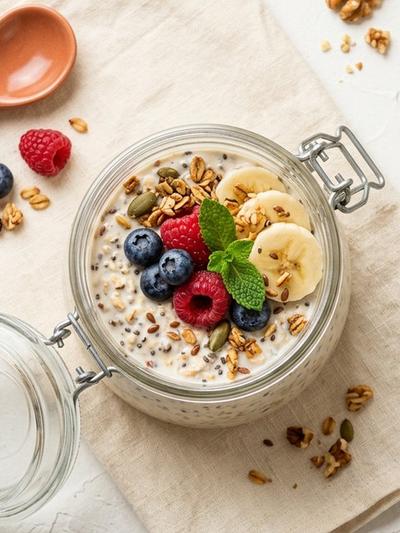
- ½ cup (75g) mixed fresh or frozen berries (thawed if frozen)
- Optional: 1 tsp (5g) nut butter, 1 tbsp (8g) hemp seeds
Instructions
- In a jar or container with a lid (a standard 475ml / 16 oz mason jar works perfectly), add the Greek yogurt and protein powder. Stir vigorously until the protein powder is fully dissolved — undissolved clumps will not incorporate well once chia is added.
- Add the almond milk, vanilla extract, and maple syrup if using. Stir again until fully combined.
- Add the chia seeds. Stir thoroughly to distribute them evenly throughout the liquid. At this stage, the mixture will look very thin — this is correct.
- Let the jar sit uncovered at room temperature for 5 minutes. Then stir again — this second stir is important to prevent chia seeds from clumping at the bottom as they begin to absorb liquid.
- Seal the jar and refrigerate for a minimum of 4 hours, preferably overnight (8 hours). The mixture will thicken significantly.
- In the morning, remove from the refrigerator and stir. If the pudding is thicker than you prefer, stir in 1–2 tablespoons of almond milk to adjust consistency.
- Top with berries immediately before eating. Add nut butter or hemp seeds if desired.
Batch prep: Multiply all ingredients by 5 and prepare jars assembly-line style. Label with day of the week. Keeps refrigerated for 5 days.
Nutrition per Serving (with berries, no optional toppings)
| Nutrient | Approximate Amount |
|---|---|
| Calories | ~350 kcal |
| Protein | ~25g |
| Fat | ~12g |
| Carbohydrates | ~32g |
| Fiber | ~15g |
| Omega-3 (ALA) | ~4g |
Values are estimates and will vary based on specific brands and protein powder used.
Practical Notes
The second stir is non-negotiable. Chia seeds sink quickly and clump together at the bottom of a liquid mixture. If you only stir once at the start, you will find a solid disc of gel at the bottom of the jar in the morning with watery liquid on top. The 5-minute wait-and-restir technique distributes seeds properly.
Plant-based protein powder makes this fully vegan. Substitute a quality pea or rice protein blend for whey, and use any non-dairy milk. The texture will be slightly less creamy but nutritionally comparable.
Adjust chia quantity to personal tolerance. For those new to high-fiber eating, starting at 2 tablespoons of chia seeds rather than 3 reduces the fiber load to approximately 10g per serving. Increase gradually as the digestive system adjusts — sudden large increases in fiber can cause gas and bloating, which is particularly unwelcome for GLP-1 users.
Frozen berries are equally effective and more economical. Thaw them in the refrigerator overnight alongside the pudding, or leave them frozen on top and let them thaw by the time you eat. Frozen berries retain their antioxidant content and are significantly cheaper than fresh.
Do not skip the salt. A small pinch of salt amplifies the perceived sweetness of the vanilla and berries, reducing the temptation to add more sweetener.
Top immediately before eating, not during prep. Berries release moisture as they sit. Adding them to the jar on Sunday means watery pudding by Wednesday. Store toppings separately and add fresh each morning.
Frequently Asked Questions
What protein powder works best in this recipe, and does the type matter?
My chia pudding came out watery rather than thick — what went wrong?
I am new to high-fiber eating and noticed digestive discomfort after trying this recipe — is this normal?
Can I make this recipe dairy-free?
When is the best time to eat this breakfast on GLP-1 medication?
This article provides general food and nutrition guidance only. It does not constitute medical advice. Always consult your healthcare provider regarding your GLP-1 medication and individual nutritional needs.