Each serving of this plant-based breakfast bowl delivers 26 grams of protein from green lentils, chickpeas, tahini, and hemp hearts, along with 13 grams of fiber that supports steady blood sugar through the morning. The cumin-spiced lentils provide slow-release complex carbohydrates while the roasted chickpeas add a satisfying crunch that holds up well across several days of meal prep. Iron, folate, and magnesium come naturally from the legume base, nutrients often underconsumed during calorie-restricted eating.
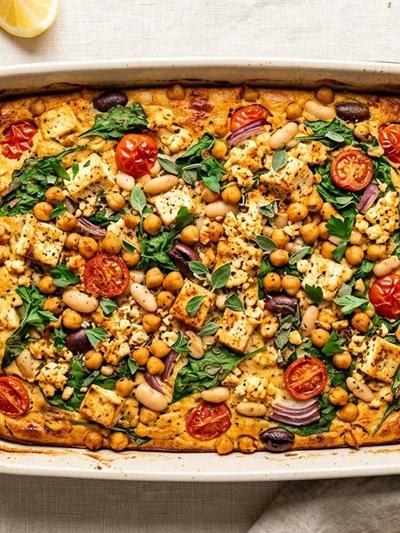
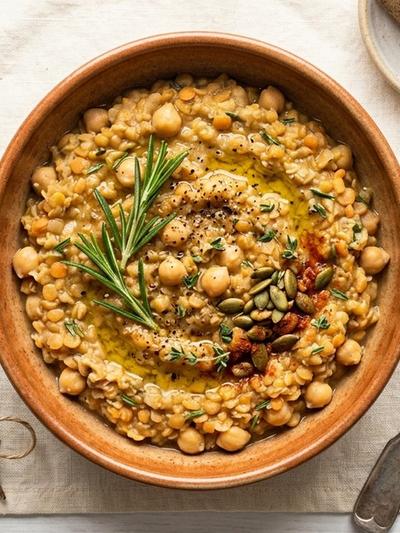
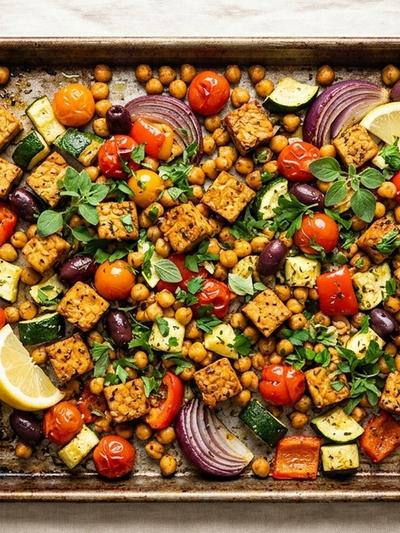
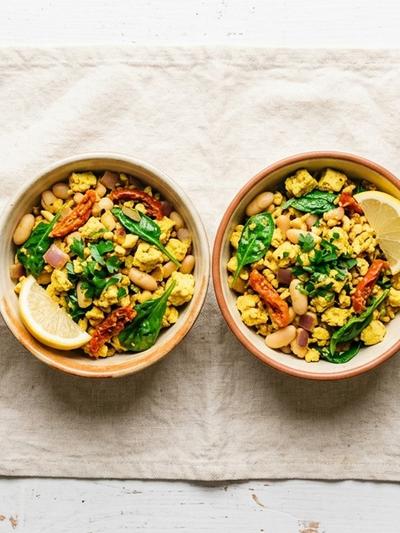
The flavor here is unmistakably Mediterranean morning. Warm lentils seasoned with cumin and coriander meet crispy za'atar-dusted chickpeas, bright roasted cherry tomatoes, and garlicky wilted spinach. A drizzle of herbed tahini sauce pulls everything together with its nutty richness and sharp lemon finish, the kind of combination that makes you forget you are eating something this nutritious.
This format suits GLP-1 users especially well because each component stores and reheats independently. When your appetite is unpredictable, having a fully prepared breakfast that takes two minutes to warm up removes the friction of morning cooking. The bowl is calorie-dense enough to be satisfying in a moderate portion but gentle on digestion thanks to the well-cooked lentils and soft spinach.
Why This Works on GLP-1
The 26 grams of plant-based protein per serving supports muscle preservation during weight loss, a critical concern for anyone on Mounjaro or similar GLP-1 receptor agonists. Research consistently shows that adequate protein intake during medically assisted weight loss helps maintain lean body mass while fat is lost. This bowl reaches that threshold entirely from plant sources, combining the complementary amino acid profiles of lentils and chickpeas to form a complete protein. The hemp heart topping fills any remaining gaps in methionine and cysteine.
Fiber intake often drops when overall food volume decreases on GLP-1 medications, but these bowls provide 13 grams per serving, nearly half the daily recommended intake. Green lentils are gentler on digestion than some high-fiber foods because they break down into a soft texture when simmered, reducing the bloating risk that raw vegetables or bran cereals can trigger. The spinach adds prebiotic compounds without the bulk that sometimes causes discomfort with slowed gastric emptying.
The combination of plant protein and soluble fiber creates a notably stable blood sugar response after eating. Both lentils and chickpeas score low on the glycemic index, which complements the glucose-regulating effects of GLP-1 medications. The small amount of healthy fat from tahini, hemp hearts, and olive oil ensures absorption of fat-soluble vitamins from the spinach and tomatoes.
Ingredients (serves 4)
For the herbed lentils:
- 1¼ cups (240g) dry green or brown lentils, rinsed
- 2½ cups (600ml) low-sodium vegetable broth
- 1 small yellow onion, finely diced
- 3 cloves garlic, minced
- 1½ tsp ground cumin
- 1 tsp ground coriander
- ½ tsp smoked paprika
- 2 tbsp (30ml) fresh lemon juice
- ½ tsp fine sea salt
- Black pepper to taste
For the crispy za'atar chickpeas:
- 1 can (15 oz / 425g) chickpeas, drained, rinsed, and patted very dry
- 2 tsp (10ml) olive oil
- 1 tsp za'atar
- ½ tsp smoked paprika
- ¼ tsp garlic powder
- Pinch of fine sea salt
For the roasted cherry tomatoes:
- 1 pint (280g) cherry or grape tomatoes, halved
- 1 tsp (5ml) olive oil
- ½ tsp dried oregano
- Pinch of salt
For the garlicky spinach:
- 5 oz (140g) baby spinach
- 1 clove garlic, thinly sliced
- 1 tsp (5ml) olive oil
- Pinch of crushed red pepper flakes
For the herbed tahini sauce:
- 3 tbsp (45g) tahini
- 2 tbsp (30ml) fresh lemon juice
- 1 small clove garlic, grated
- 2 tbsp fresh parsley or dill, finely chopped
- 3–4 tbsp (45–60ml) cold water
- Pinch of salt
For topping:
- 3 tbsp (21g) hemp hearts
- Za'atar for sprinkling
- Fresh herbs (parsley, dill, or mint)
- Lemon wedges
Instructions
Preheat and start the lentils:
- Preheat your oven to 425°F (220°C) and line a large baking sheet with parchment paper. You will roast the chickpeas and tomatoes simultaneously on the same sheet.
- Heat a medium saucepan over medium heat. Add the diced onion and cook for 4–5 minutes until softened and translucent, stirring occasionally. Add a splash of broth if the pan gets dry.
- Stir in the minced garlic, cumin, coriander, and smoked paprika. Cook for 30 seconds until fragrant, which blooms the spices and deepens their flavor.
- Add the rinsed lentils and vegetable broth. Bring to a boil, then reduce to a gentle simmer. Cover and cook for 22–25 minutes until the lentils are tender but still hold their shape. They should absorb most of the broth.
- Once done, stir in the lemon juice, salt, and pepper. The acid brightens the earthy lentils considerably. Set aside.
Roast the chickpeas and tomatoes:
- While the lentils simmer, toss the thoroughly dried chickpeas with 2 teaspoons of olive oil, za'atar, smoked paprika, garlic powder, and a pinch of salt. Spread them in a single layer on one half of the prepared baking sheet. Drying them well is the key to crispness; any residual moisture will steam instead of roast.
- On the other half of the sheet, toss the halved cherry tomatoes with 1 teaspoon olive oil, dried oregano, and a pinch of salt. Arrange them cut-side up.
- Roast for 20–25 minutes, shaking the chickpea side once halfway through. The chickpeas should be golden and crunchy, the tomatoes soft and slightly caramelized at the edges.
Prepare the spinach and sauce:
- While everything roasts, heat 1 teaspoon of olive oil in a large skillet over medium heat. Add the sliced garlic and red pepper flakes, stirring for 30 seconds until the garlic is fragrant but not browned.
- Add the baby spinach in batches, tossing with tongs until fully wilted, about 2–3 minutes total. Season lightly with salt. Transfer to a plate and set aside.
- Make the herbed tahini by whisking together the tahini, lemon juice, grated garlic, chopped herbs, and salt in a small bowl. Add cold water one tablespoon at a time, whisking after each addition, until the sauce is pourable but not thin. It should coat the back of a spoon.
Assemble and portion:
- Divide the herbed lentils among four meal prep containers or bowls. Top each with a portion of the garlicky spinach and roasted tomatoes.
- If eating immediately, add the crispy chickpeas, a drizzle of herbed tahini, a sprinkle of hemp hearts, and fresh herbs. If storing, see the practical notes below for keeping the crispy components separate.
Nutrition per Serving
| Nutrient | Amount (approx.) |
|---|---|
| Calories | ~425 kcal |
| Protein | ~26g |
| Fat | ~14g |
| Carbohydrates | ~50g |
| Fiber | ~13g |
Estimates based on standard USDA values for green lentils, canned chickpeas, tahini, hemp hearts, and olive oil. Actual values may vary by brand.
Practical Notes
Store components separately for best texture. The lentils, spinach, and roasted tomatoes can be combined in one container since they all reheat well together. Keep the crispy chickpeas in a small airtight jar at room temperature and the tahini sauce in a separate small container in the fridge. This prevents the chickpeas from going soft and the sauce from making everything soggy. Assembly takes under a minute each morning.
Refrigerator life and reheating. The lentil-spinach-tomato base keeps well for 4–5 days in the refrigerator. Reheat each portion in the microwave for 90 seconds to 2 minutes, or warm on the stovetop with a splash of water. The crispy chickpeas stay crunchy at room temperature for 3–4 days in a sealed jar.
Scale up the lentils for additional meals. This lentil base works equally well as a side dish for lunch or dinner, so consider doubling it. Cooked lentils also freeze well for up to 3 months. Thaw overnight in the refrigerator and reheat with a squeeze of lemon to refresh the flavor.
Add a poached egg for extra protein. If you are in a later phase of your GLP-1 treatment and your appetite supports it, topping the bowl with a soft-boiled or poached egg adds 6 grams of protein and makes the bowl even more satisfying. This also adds the eggs tag to the meal if you are tracking protein sources.
Swap the greens based on what you have. Baby kale, chopped Swiss chard, or arugula all work in place of spinach. Kale takes about a minute longer to wilt and adds slightly more fiber. Arugula can be added raw for a peppery contrast that pairs well with the earthy lentils.
Frequently Asked Questions
Can I eat this bowl cold if my appetite is low in the morning?
What can I use instead of tahini if I have a sesame allergy?
How long do these bowls last in the fridge, and can I freeze them?
I am in the early weeks of GLP-1 treatment and can barely eat in the morning. How should I adjust?
Do I need to soak the lentils before cooking?
This article provides general food and nutrition guidance only. It does not constitute medical advice. Always consult your healthcare provider regarding your GLP-1 medication and individual nutritional needs.