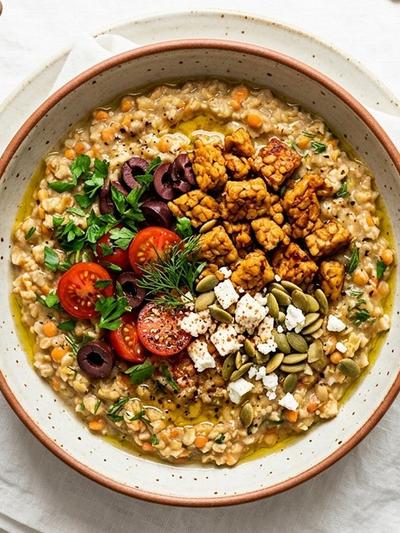
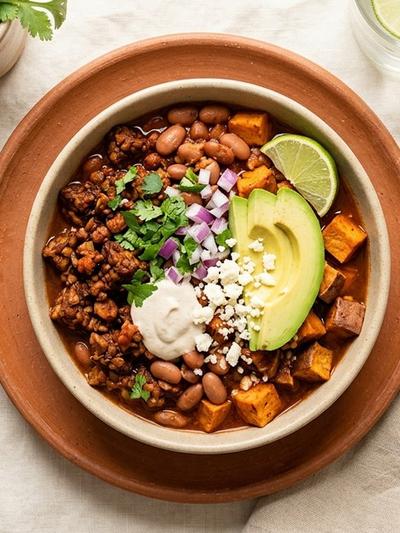
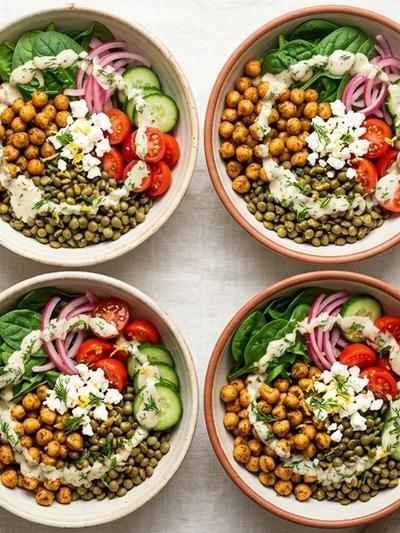
Each bowl of this Tuscan-style breakfast porridge packs 27 grams of plant-based protein from the combination of red lentils and chickpeas — a pairing that provides all essential amino acids without any animal products. The 15 grams of fiber per serving come almost entirely from the legumes themselves, supporting steady blood sugar and prolonged satiety throughout the morning. You set it up the night before, and by morning the slow cooker has done all the work.
The flavor is unmistakably Tuscan. Fresh rosemary infuses the porridge overnight, developing a deep herbal warmth that pairs with the sweet, concentrated punch of sun-dried tomatoes and a gentle smoked paprika backdrop. A squeeze of fresh lemon juice stirred in at the end lifts everything — brightening the earthy lentil base and cutting through the richness with clean acidity. The texture is silky and thick from the dissolved red lentils, with whole chickpeas folded in at the last moment for satisfying pops of bite.
For GLP-1 users, this recipe solves the perpetual morning problem: wanting something warm and nourishing when your appetite is modest and your energy for cooking is nonexistent. The porridge reheats in two minutes and holds its texture for four days in the refrigerator, so you prep once and eat all week. Each serving is substantial enough to feel like a real breakfast but gentle enough on digestion that it sits comfortably even when appetite is low.
Why This Works on GLP-1
The 27 grams of plant-based protein per serving directly addresses the muscle preservation challenge that Mounjaro and other GLP-1 medications create during weight loss. When your body is shedding weight rapidly, adequate protein at every meal signals your muscles to stay — and spreading protein intake across breakfast, lunch, and dinner is more effective for muscle protein synthesis than loading it all into one large evening meal. This porridge makes it easy to hit that morning protein target without cooking a thing in the morning.
The 15 grams of fiber per bowl work with your medication rather than against it. GLP-1 drugs already slow gastric emptying, so very high-fiber meals can sometimes cause uncomfortable bloating. This recipe falls in the sweet spot: enough fiber to support gut health and blood sugar regulation, but from well-cooked, soft legumes rather than raw vegetables or bran, which makes it far easier to digest. The overnight cooking breaks down the lentils completely, effectively pre-digesting much of the fiber.
Red lentils are among the best plant sources of iron and folate — two nutrients that can fall short when overall food intake drops on GLP-1 medications. The vitamin C from the lemon juice and tomatoes also enhances iron absorption from the legumes, a detail that matters more when you are eating smaller portions across the day.
Ingredients (serves 4)
For the overnight slow cooker base:
- 1 1/2 cups (270g) dry red lentils, rinsed until water runs clear
- 4 cups (960ml) low-sodium vegetable broth
- 1 cup (240ml) water
- 1 medium yellow onion, finely diced
- 3 cloves garlic, minced
- 1/4 cup (40g) dry-packed sun-dried tomatoes, roughly chopped
- 1 tablespoon fresh rosemary, finely minced (or 1 1/2 teaspoons dried)
- 1 teaspoon ground cumin
- 1/2 teaspoon smoked paprika
- 1/4 teaspoon red pepper flakes
- 1/2 teaspoon fine sea salt
Morning additions:
- 1 can (15 oz / 425g) chickpeas, drained and rinsed
- 3 cups (90g) baby spinach
- 2 tablespoons (30ml) fresh lemon juice
- 2 tablespoons (16g) nutritional yeast
For serving (optional):
- Extra-virgin olive oil for drizzle
- Fresh flat-leaf parsley, chopped
- Cracked black pepper
- Lemon wedges
Instructions
The night before — assemble the slow cooker:
Rinse the red lentils under cold running water, swishing with your hand until the water runs clear. This removes surface starch that would otherwise make the porridge gummy instead of creamy.
Add the rinsed lentils, vegetable broth, water, diced onion, garlic, sun-dried tomatoes, rosemary, cumin, smoked paprika, red pepper flakes, and salt to a 4-quart or larger slow cooker. Stir to combine.
Cover and set to LOW. Cook for 7 to 8 hours. The lentils will dissolve completely into a thick, creamy porridge — this is exactly what you want.
In the morning — finish and serve:
Remove the lid and stir the porridge well, scraping along the sides and bottom. The consistency should be thick like polenta. If it looks too dry or has stuck to the edges, stir in 1/4 to 1/2 cup (60–120ml) of hot water or additional broth until it reaches a spoonable consistency.
Add the drained chickpeas and stir gently. Switch the slow cooker to HIGH or WARM and let the chickpeas heat through for 3 to 5 minutes. They should be warmed but still hold their shape — this textural contrast against the smooth lentil base is the point.
Fold in the baby spinach in handfuls, stirring after each addition. The residual heat will wilt the spinach in about 1 minute.
Stir in the lemon juice and nutritional yeast. The lemon brightens the earthy lentils immediately, and the nutritional yeast adds a subtle savory depth along with extra B vitamins and protein.
Taste and adjust seasoning — the porridge may need another pinch of salt or a crack of black pepper. Spoon into bowls and top with chopped parsley and a thin drizzle of good olive oil if you like.
Nutrition per Serving
| Nutrient | Amount (approx.) |
|---|---|
| Calories | ~410 kcal |
| Protein | ~27g |
| Fat | ~3g |
| Carbohydrates | ~65g |
| Fiber | ~15g |
Calculated from USDA values for dry red lentils, canned chickpeas, and all listed ingredients. Olive oil drizzle not included — add approximately 40 kcal per teaspoon if used.
Practical Notes
Prevent sticking overnight. Some slow cookers run hotter than others, and red lentils can scorch on the bottom during a long cook. Lightly grease the insert with cooking spray before adding ingredients, or use a slow cooker liner. If your unit has a known hot-spot issue, set it on the WARM setting for the final 2 hours by using a plug timer.
Adjust thickness in the morning. The porridge will be very thick after 8 hours — almost like hummus in some slow cookers. Keep hot broth or water nearby to stir in until you reach your preferred consistency. The texture should be loose enough to spoon but thick enough to hold its shape briefly on a spoon, similar to good oatmeal.
Meal prep for the week. Divide into four airtight containers and refrigerate for up to 4 days. Reheat individual portions in the microwave for 90 seconds, stirring halfway through and adding a splash of water to restore creaminess. The porridge also freezes well for up to 2 months — thaw overnight in the refrigerator before reheating.
Start with a smaller portion if your appetite is low. GLP-1 medications can make mornings particularly challenging for appetite. Serve yourself three-quarters of a portion and save the rest. Even 20 grams of protein at breakfast makes a meaningful difference for muscle preservation compared to skipping the meal entirely.
Swap the legumes to suit your pantry. Brown or green lentils work in place of red, but they hold their shape rather than dissolving — the result will be chunkier, more like a stew than a porridge. Cannellini beans or butter beans can replace the chickpeas for a fully Tuscan variation. The protein content stays similar with any of these substitutions.
Frequently Asked Questions
My morning appetite on Wegovy is almost nonexistent — is this recipe still worth making?
Can I make this without nutritional yeast?
How long does this porridge keep, and can I freeze it?
I am in the early dose-titration phase and can barely eat a full meal — how should I adapt this?
My slow cooker only has a HIGH setting — can I still make this overnight?
This article provides general food and nutrition guidance only. It does not constitute medical advice. Always consult your healthcare provider regarding your GLP-1 medication and individual nutritional needs.