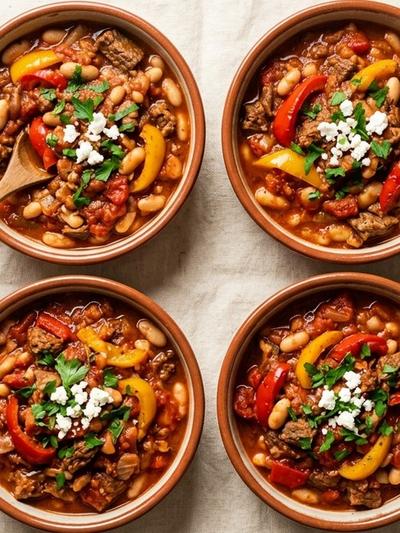
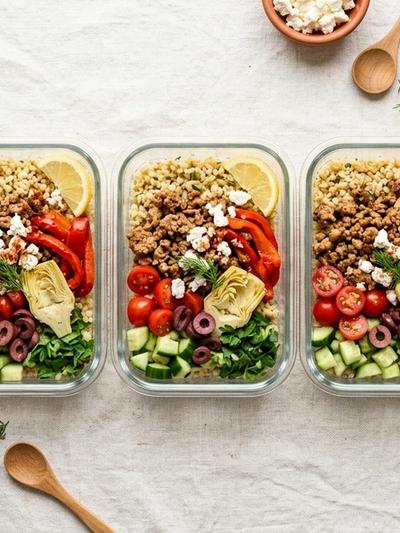
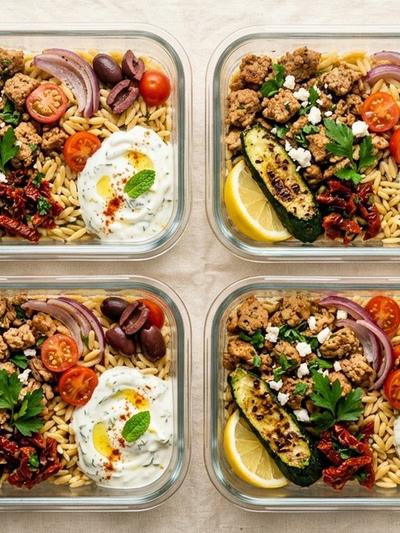
Each bowl of this Sicilian-inspired dinner packs 36 grams of protein from lean ground turkey and farro, a nutty ancient grain that contributes complete plant protein alongside 8 grams of fiber per serving. The caponata brings eggplant, celery, tomatoes, and olives together in a sauce that's rich with Mediterranean micronutrients — potassium, vitamin C, and manganese — without relying on heavy cream or excess fat. At 465 calories, a single bowl covers roughly a quarter of most daily protein targets while keeping the macronutrient balance firmly in favor of satiety.
Caponata is one of Sicily's oldest preparations, and its sweet-sour backbone — red wine vinegar brightened by a whisper of honey — makes these bowls taste nothing like reheated leftovers on day four. The fennel seed and oregano in the turkey echo the caponata's warmth, while briny capers and cracked green olives add a mineral sharpness that cuts through the meatiness. Spooned over chewy farro tossed with lemon zest and parsley, every bite moves between earthy, tangy, and savory without any single note dominating.
For people on GLP-1 medications, the three-component format is especially practical: you portion exactly what your appetite allows, and each component holds its texture and flavor through four to five days of refrigeration. The eggplant breaks down just enough during reheating to thicken the caponata naturally, and the farro stays distinctly chewy rather than turning to mush. Smaller appetites can scale down the grain base and still get the full protein hit from the turkey and vegetable layers.
Why This Works on GLP-1
Thirty-six grams of protein per serving puts this bowl squarely in the range that research links to meaningful muscle-protein synthesis — the metabolic process that protects lean mass during the weight loss that Mounjaro and similar GLP-1 medications facilitate. Ground turkey provides the bulk of that protein in a form that's easy to digest, and farro adds another five grams alongside slow-releasing complex carbohydrates. Because muscle preservation is one of the primary nutritional concerns during GLP-1-assisted weight change, consistently hitting 30-plus grams of protein at dinner is a concrete strategy rather than an abstract goal.
The eight grams of fiber per bowl come from multiple gentle sources — eggplant, farro, tomatoes, celery — rather than one aggressive fiber bomb. That distribution matters for GLP-1 users, whose slowed gastric emptying can amplify bloating from large doses of insoluble fiber. The soluble fiber in eggplant and the mixed fiber in farro work with delayed gastric emptying rather than against it, supporting steady blood sugar without digestive distress.
The Mediterranean eating pattern behind this recipe has its own evidence base for metabolic health, including improved insulin sensitivity and reduced inflammation. Olive oil and olives contribute monounsaturated fats, while the polyphenols in eggplant and tomatoes act as antioxidants. For Zepbound users navigating the transition to smaller, more nutrient-dense meals, a bowl like this demonstrates that eating less doesn't require eating bland.
Ingredients (serves 4)
For the turkey:
- 1¼ lb (567g) 93% lean ground turkey
- 1 teaspoon dried oregano
- ½ teaspoon fennel seeds, lightly crushed
- ¼ teaspoon red pepper flakes
- ½ teaspoon fine sea salt
- Cooking spray
For the caponata:
- 1 medium eggplant (about 10 oz / 300g), cut into ½-inch dice
- ½ teaspoon fine sea salt (for salting the eggplant)
- 1 tablespoon extra-virgin olive oil
- 1 medium yellow onion, finely diced
- 2 celery stalks, cut into ¼-inch slices
- 3 garlic cloves, minced
- 1 can (14 oz / 400g) crushed tomatoes
- 12 green olives (such as Castelvetrano), pitted and roughly chopped
- 2 tablespoons capers, drained and rinsed
- 2 tablespoons red wine vinegar
- 1 tablespoon honey
For the herbed farro:
- ¾ cup (140g) semi-pearled farro
- 2½ cups (600ml) water
- ¼ teaspoon fine sea salt
- Zest of 1 lemon
- 2 tablespoons fresh flat-leaf parsley, finely chopped
For serving:
- Fresh basil leaves
- Freshly ground black pepper
Instructions
Cook the farro:
- Rinse the farro under cold water and combine it with 2½ cups water and ¼ teaspoon salt in a medium saucepan. Bring to a boil over high heat, then reduce to a steady simmer, cover, and cook for 25–30 minutes until the grains are tender but still distinctly chewy. Farro should have some bite — it continues to absorb liquid as it sits, so pull it off the heat when it's slightly firmer than you'd want it.
- Drain any remaining water, then toss the farro with the lemon zest and chopped parsley while it's still warm. The heat opens the essential oils in the zest, perfuming the grain base without adding acidity. Set aside.
Prepare and brown the turkey:
- While the farro cooks, toss the diced eggplant with ½ teaspoon salt in a colander and let it sit. The salt draws out moisture and reduces the amount of oil the eggplant absorbs during cooking — this step runs passively while you handle the turkey.
- In a large non-stick skillet or Dutch oven, coat the surface with cooking spray and heat over medium-high. Add the ground turkey, breaking it into small pieces with a wooden spoon. Season with oregano, crushed fennel seeds, red pepper flakes, and ½ teaspoon salt. Cook for 7–8 minutes, stirring occasionally, until the turkey is browned and cooked through with no pink remaining. Transfer to a plate.
Build the caponata:
- In the same skillet, heat 1 tablespoon olive oil over medium heat. Pat the salted eggplant dry with a clean towel — removing surface moisture is what lets it caramelize rather than steam. Add the eggplant and cook for 5–6 minutes, stirring every 90 seconds, until golden on several sides.
- Add the diced onion and sliced celery. Cook for 3–4 minutes until the onion turns translucent and the celery softens slightly. Stir in the garlic and cook for 30 seconds, until fragrant.
- Pour in the crushed tomatoes, then add the chopped olives and capers. Stir to combine, reduce the heat to medium-low, and let the mixture simmer for 10 minutes. The tomatoes will thicken and the eggplant will begin to break down at the edges, creating a naturally silky sauce.
- Stir in the red wine vinegar and honey. The vinegar provides the sharp backbone of caponata's signature sweet-sour balance, and the honey rounds off any harshness from the canned tomatoes. Simmer for 2 more minutes, then taste and adjust salt, vinegar, or honey to your preference. Fold the browned turkey back into the caponata and stir gently to combine.
Assemble the bowls:
- Divide the herbed farro evenly among 4 meal prep containers or shallow bowls. Spoon the turkey caponata over each portion of farro. Tear a few basil leaves over the top and finish with freshly ground black pepper. If eating immediately, serve warm. For meal prep, let the bowls cool to room temperature before sealing and refrigerating.
Nutrition per Serving
| Nutrient | Amount (approx.) |
|---|---|
| Calories | ~465 kcal |
| Protein | ~36g |
| Fat | ~17g |
| Carbohydrates | ~44g |
| Fiber | ~8g |
Estimates based on USDA data for 93% lean ground turkey, semi-pearled farro, and standard Mediterranean vegetables. Actual values may vary by brand and exact portion size.
Practical Notes
Meal prep storage and reheating. These bowls keep well in airtight containers for up to 5 days in the refrigerator. Reheat in the microwave for 2–2½ minutes at medium power, stirring halfway through. The caponata actually improves overnight as the vinegar mellows and the flavors meld — day two is often the best day.
Freeze the caponata and turkey separately from the farro. The turkey-caponata mixture freezes beautifully for up to 3 months in zip-top bags or freezer containers. Cook fresh farro the night you defrost, since frozen farro loses its chew and turns gummy. This separation also lets you batch-cook a double recipe of caponata and pair it with different grains or proteins throughout the month.
Salting the eggplant is not optional. Skipping this step means the eggplant absorbs olive oil like a sponge, which both increases the fat content and gives you a greasy, soft result instead of caramelized cubes. Ten minutes in a colander while you brown the turkey is enough — the timing dovetails naturally with the recipe flow.
Scale for very small appetites. If you're in an early dose-adjustment phase and eating smaller volumes, prepare the full recipe but divide it into 6 portions instead of 4. Each serving drops to roughly 310 calories and 24 grams of protein — still substantial — and you get an extra two days of dinners from one cooking session.
Substitute the grain base freely. Pearl couscous, quinoa, and short-grain brown rice all work in place of farro. The toss-with-lemon-zest-and-parsley step applies to any of them. If you're watching carbohydrates closely, serve the turkey caponata over steamed cauliflower rice for a lower-carb option that still hits the full 36 grams of protein.
Frequently Asked Questions
Will this recipe cause digestive issues on GLP-1 medication?
Can I use ground chicken or another protein instead of turkey?
How long does the turkey caponata keep in the refrigerator, and how should I reheat it?
What if my appetite is too small for a full serving?
Can I make the caponata in a slow cooker instead?
This article provides general food and nutrition guidance only. It does not constitute medical advice. Always consult your healthcare provider regarding your GLP-1 medication and individual nutritional needs.