Each serving of these Austrian-inspired dumplings delivers 32 grams of complete protein from two complementary sources — eggs and low-fat cottage cheese — while keeping calories at just 342. The combination of slow-digesting casein from cottage cheese and albumin from whole eggs creates a sustained amino acid release that supports muscle maintenance during active weight loss. A warm cherry-vanilla sauce adds natural sweetness and anthocyanin antioxidants without piling on added sugar. This is the kind of real dessert that fits into a structured eating plan: comforting, portion-appropriate, and built around protein rather than empty carbohydrates.
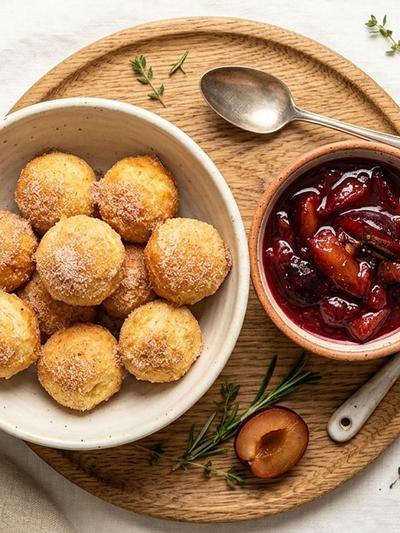
Topfenknödel — the Austrian original behind this recipe — are soft, pillow-like dumplings with a delicate tang from fresh curd cheese and a subtle sweetness from vanilla and lemon zest. The semolina binding gives each dumpling just enough structure to hold together during gentle poaching while keeping the interior cloud-soft and airy. Spooned over with warm, barely-sweetened cherry sauce, the contrast between the tangy dumplings and the bright, jewel-toned fruit is genuinely satisfying in a way that most protein desserts never manage.
For GLP-1 users, this recipe solves the common dessert dilemma: wanting something sweet without the blood sugar spike or the heavy, greasy aftermath that amplifies medication side effects. The dumplings are poached rather than fried, keeping total fat to just 9 grams per serving. Individual dumplings also make portion control intuitive — eat three or four, save the rest for tomorrow.
Why This Works on GLP-1
The 32 grams of protein per serving comes from two high-quality, complete sources: whole eggs and low-fat cottage cheese, further boosted by a small addition of vanilla protein powder. This matters because GLP-1 medications like Mounjaro significantly reduce overall food intake, creating a genuine risk of muscle loss if protein intake drops below a critical threshold. Research consistently shows that 25–35 grams of protein per meal or snack optimally stimulates muscle protein synthesis — this recipe lands right in that window. Getting that protein from a dessert means you can satisfy a sweet craving while still making meaningful progress toward your daily protein target.
The cherry sauce provides natural sweetness alongside anthocyanins — the compounds responsible for cherries' deep red color — which have documented anti-inflammatory properties that may complement the metabolic benefits of GLP-1 therapy. The recipe keeps added sugar minimal at just one tablespoon of honey across the entire batch, relying instead on the natural fructose in fruit. For users experiencing the nausea that sometimes accompanies Wegovy dose titrations, these light, tangy dumplings are far gentler on the stomach than rich, butter-heavy European pastries.
The casein protein in cottage cheese digests slowly over several hours, extending satiety well beyond what simple carbohydrate desserts provide. This makes the dumplings particularly effective as an evening treat — the sustained protein release supports overnight muscle recovery during sleep. At 342 calories per generous serving of four to five dumplings, this is a calorically responsible dessert that actually contributes meaningfully to your macros rather than simply adding empty energy.
Ingredients (serves 4)
For the dumplings:
- 6 large eggs
- 2 cups (452g) low-fat cottage cheese, 1% or 2%
- 1/3 cup (56g) fine semolina
- 1/4 cup (30g) vanilla protein powder (whey or plant-based)
- 1 tablespoon (21g) honey
- Zest of 1 lemon
- 1 teaspoon vanilla extract
- Pinch of fine sea salt
For the cherry sauce:
- 2 cups (300g) frozen sweet cherries, pitted
- 1 tablespoon (21g) honey
- 1 teaspoon cornstarch mixed with 1 tablespoon cold water
- 1/2 teaspoon vanilla extract
- Pinch of ground cinnamon
Instructions
Prepare the dumpling batter:
- Blend the cottage cheese in a food processor or blender for 30 seconds until completely smooth — this step eliminates any graininess and creates a texture similar to the traditional Austrian Topfen (quark) that these dumplings are built on. Scrape down the sides once and pulse again if needed.
- In a large mixing bowl, whisk the eggs until well combined. Add the blended cottage cheese, protein powder, semolina, honey, lemon zest, vanilla, and salt. Stir with a spatula until you have a thick, uniform batter with no dry pockets.
- Let the batter rest at room temperature for 10 minutes — the semolina needs this time to absorb moisture and swell, which is what gives the dumplings enough structural integrity to survive poaching without crumbling.
Poach the dumplings:
- While the batter rests, bring a large pot of lightly salted water to a gentle simmer. You want small, lazy bubbles rising from the bottom — not a rolling boil. Aggressive water movement will break the dumplings apart.
- Using two tablespoons or a small ice cream scoop, form the batter into roughly golf ball-sized dumplings and slide them gently into the simmering water. Work in batches of six to eight to avoid overcrowding, which drops the water temperature and causes sticking.
- Poach the dumplings for 10–12 minutes without stirring or poking them. They will float to the surface after about 5 minutes — let them continue cooking until they feel firm to a gentle touch with a slotted spoon. Remove carefully to a plate and repeat with any remaining batter.
Make the cherry sauce in the same pot:
- Once all dumplings are cooked, drain the poaching water from the pot and return it to medium heat. Add the frozen cherries, honey, vanilla, and cinnamon. Cook for 4–5 minutes, stirring occasionally, until the cherries are soft, warmed through, and have released their ruby-colored juices.
- Give the cornstarch slurry a quick stir (it settles fast) and pour it into the cherry mixture. Stir constantly for 30–60 seconds until the sauce thickens just enough to coat the back of a spoon — it should still be pourable, not gluey.
- Divide the dumplings among four bowls, placing four to five in each. Spoon the warm cherry sauce generously over the top and serve immediately.
Nutrition per Serving
| Nutrient | Amount (approx.) |
|---|---|
| Calories | ~342 kcal |
| Protein | ~32g |
| Fat | ~9g |
| Carbohydrates | ~32g |
| Fiber | ~2g |
Calculated using 1% low-fat cottage cheese, standard large eggs, vanilla whey protein powder, and frozen sweet cherries. Values may vary depending on specific brands and cottage cheese fat percentage.
Practical Notes
Blend the cottage cheese completely smooth. This is the single most important step for dumpling texture. Unblended cottage cheese creates lumpy, grainy dumplings that are more likely to fall apart during poaching. If you don't own a blender or food processor, press the cottage cheese through a fine-mesh sieve with the back of a spoon — it takes two minutes and makes a genuine difference.
Freeze uncooked dumplings for quick weeknight desserts. Form the batter into balls on a parchment-lined tray and freeze solid for about two hours, then transfer to a zip-lock bag. Cook directly from frozen by adding 3–4 extra minutes to the poaching time. They keep for up to three months and give you a protein-packed dessert ready in 15 minutes on any given evening.
Swap the cherry sauce for seasonal fruit. Plums, apricots, peaches, or mixed berries all work beautifully with the same honey-vanilla-cinnamon sauce base. Use equal weight of frozen or fresh fruit. Stone fruits may need an extra minute of cooking to break down fully. Rhubarb is a particularly good Northern European option — use a touch more honey to offset its tartness.
Start with two or three dumplings if your appetite is reduced. GLP-1 medications slow gastric emptying, and dense protein foods like these are particularly satiating. Eat slowly, wait ten minutes, then decide if you want more. Many users find that two to three dumplings with a few spoonfuls of sauce is the right amount, especially in the first weeks after a dose increase.
Choose your protein powder carefully. Unflavored or vanilla works best here — chocolate changes the flavor profile entirely, though it is not terrible with cherries. If you prefer to skip protein powder altogether, replace it with an extra tablespoon of semolina for binding structure. You will lose roughly 6 grams of protein per serving, bringing the total to about 26 grams — still solid for a dessert.
Frequently Asked Questions
Can I eat these dumplings if I'm experiencing nausea from my GLP-1 medication?
Can I use Greek yogurt or ricotta instead of cottage cheese?
How long do cooked dumplings keep, and how should I reheat them?
What if I can only eat very small portions right now?
My dumplings fell apart during poaching — what went wrong?
This article provides general food and nutrition guidance only. It does not constitute medical advice. Always consult your healthcare provider regarding your GLP-1 medication and individual nutritional needs.