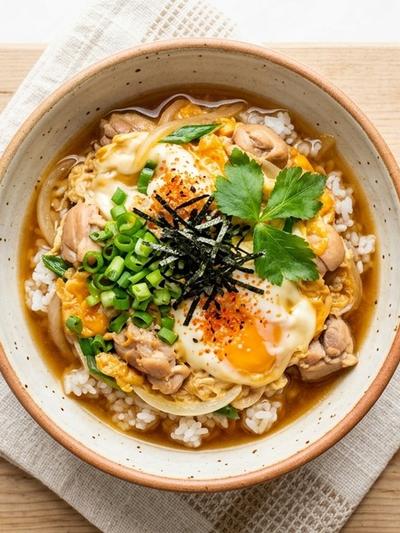
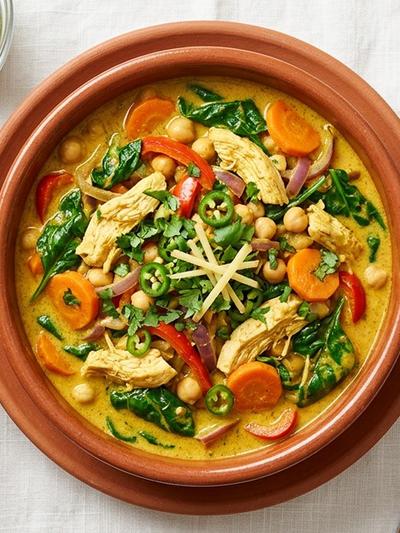
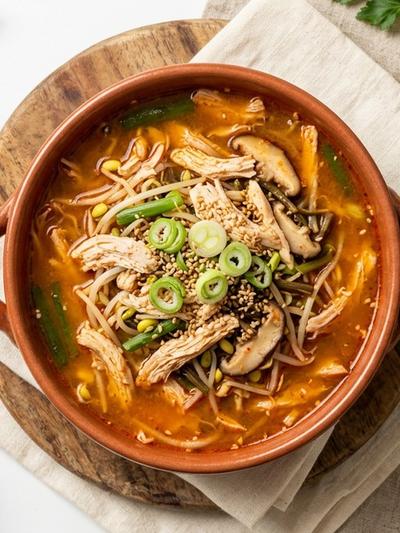
Each bowl of this Japanese chicken udon packs 37 grams of protein and just 385 calories, built from tender poached chicken breast, chewy udon noodles, shiitake mushrooms, and shelled edamame. The broth — seasoned with soy sauce, mirin, and fresh ginger — delivers savory depth without added fat. Baby spinach wilts into the hot soup in seconds, adding iron and folate to an already nutrient-dense bowl.
The beauty of this dish lies in its layered umami. Shiitake mushrooms bring an earthy richness that deepens the chicken broth, while mirin adds just a touch of sweetness to balance the soy. Fresh ginger cuts through with clean, warming heat, and the edamame adds a gentle pop of texture against the slippery, satisfying udon noodles. It tastes like something from a Japanese noodle shop, not a calorie-conscious dinner.
For anyone on GLP-1 medication, this is exactly the kind of meal that works with your changed appetite rather than against it. The warm broth is naturally soothing on a sensitive stomach, the noodles provide satisfying chew in a modest portion, and the high protein content ensures you are preserving muscle mass even when eating less. Everything cooks in a single pot in 25 minutes, which matters when reduced appetite means you may not feel motivated to cook an elaborate dinner.
Why This Works on GLP-1
With 37 grams of protein per serving, this udon bowl delivers more than half the daily minimum that many nutritionists recommend during GLP-1-assisted weight loss. Preserving lean muscle mass is one of the most important aspects of losing weight on medications like Mounjaro or Wegovy. When your appetite drops significantly and you eat fewer meals, each one needs to carry its weight in protein. Here, the chicken breast and edamame together provide a complete amino acid profile that supports muscle maintenance and recovery.
The 5 grams of fiber per bowl come primarily from edamame and shiitake mushrooms, both of which are gentle on digestion. Unlike raw high-fiber vegetables that can cause bloating on GLP-1 medications, these ingredients cook soft in the broth, making them easy to tolerate. The warm liquid itself aids digestion and helps with the hydration that many people on these medications need more of.
At just 7 grams of fat per serving, this is a remarkably lean dinner that avoids triggering the nausea some GLP-1 users experience with high-fat meals. The ginger in the broth has well-documented anti-nausea properties, making it a smart choice on days when your stomach feels unsettled. The carbohydrates from the udon noodles provide steady energy without a blood sugar spike, thanks to the protein and fiber slowing absorption.
Ingredients (serves 4)
For the broth:
- 5 cups (1.2L) low-sodium chicken broth
- 2 tablespoons (30ml) low-sodium soy sauce
- 1 tablespoon (15ml) mirin
- 1 tablespoon fresh ginger, finely grated
- 2 cloves garlic, minced
- 1 teaspoon instant dashi powder (hon-dashi), optional but recommended
For the bowl:
- 1 lb (450g) boneless, skinless chicken breast, sliced into thin strips
- 3 packs (600g total) frozen udon noodles
- 6 oz (170g) fresh shiitake mushrooms, stems removed, sliced
- 1 cup (150g) frozen shelled edamame
- 4 cups (120g) baby spinach
- 1 teaspoon toasted sesame oil
To finish:
- 3 green onions, thinly sliced
- Shichimi togarashi or red pepper flakes, to taste (optional)
- Nori strips, for garnish (optional)
Instructions
Build the broth:
- In a large pot or Dutch oven, combine the chicken broth, soy sauce, mirin, grated ginger, minced garlic, and dashi powder if using. Bring to a gentle simmer over medium-high heat. Building the broth with aromatics from the start means every element of the soup absorbs flavor as it cooks, not just the surface.
Cook the chicken and vegetables:
Reduce heat to medium. Add the sliced chicken breast to the simmering broth, spreading the pieces apart so they do not clump. Poach for 4 to 5 minutes until the chicken is cooked through and no longer pink in the center. Slicing the chicken into thin strips ensures fast, even cooking and creates pieces that are easy to eat with chopsticks or a fork.
Add the sliced shiitake mushrooms and frozen edamame to the pot. Simmer for 3 minutes until the mushrooms are tender and the edamame is heated through. The mushrooms release their umami into the broth as they cook, deepening the overall flavor of the soup.
Add the noodles and finish:
Add the frozen udon noodles directly to the pot. Use tongs or chopsticks to gently separate the noodle blocks as they thaw in the hot broth, about 2 to 3 minutes. Frozen udon goes straight from the package into the pot with no separate boiling step, which is what makes this a true one-pot meal.
Once the noodles are fully separated and heated through, scatter the baby spinach over the surface and let it wilt into the broth for 30 to 60 seconds. Remove the pot from heat and drizzle the toasted sesame oil over the surface.
Divide among four deep bowls, making sure each gets an even share of chicken, noodles, mushrooms, edamame, and spinach. Ladle broth generously over each portion. Top with sliced green onions and a pinch of shichimi togarashi if you enjoy a little heat. Tear nori strips over the top for extra umami if desired.
Nutrition per Serving
| Nutrient | Amount (approx.) |
|---|---|
| Calories | ~385 kcal |
| Protein | ~37g |
| Fat | ~7g |
| Carbohydrates | ~39g |
| Fiber | ~5g |
Calculated using USDA data for raw boneless skinless chicken breast, frozen udon noodles, fresh shiitake mushrooms, and frozen shelled edamame. Actual values may vary by brand.
Practical Notes
Make it meal-prep friendly. Store the broth with chicken and vegetables in one container and the cooked noodles separately to prevent them from absorbing all the liquid overnight. Reheat the broth on the stovetop first, then add the noodles and warm through for a minute or two. Stored this way, it keeps for 3 to 4 days in the refrigerator without any loss in quality.
Swap the protein if needed. Firm tofu cut into cubes or peeled shrimp both work as direct substitutes. For tofu, add it with the mushrooms so it has time to absorb flavor from the broth. For shrimp, add them in the last 3 minutes to avoid overcooking. Both alternatives keep the calorie count similar while changing the texture and flavor profile.
Start smaller if your appetite is low. Serve yourself half a portion initially and return for more if hunger allows. The broth reheats beautifully, so nothing is wasted. Many GLP-1 users find that warm, broth-based meals are among the most comfortable to eat, even on their lowest-appetite days.
Use dried udon if frozen is unavailable. Dried udon noodles, about 7 oz (200g) for four servings, work but need 8 to 10 minutes of simmering instead of 2 to 3. Add them to the broth right after the chicken and before the mushrooms and edamame, adjusting timing so the vegetables go in during the last 3 minutes. The texture will be slightly firmer and less chewy than frozen, but the flavor is the same.
Do not skip the sesame oil. It adds only about 10 calories per serving, but the nutty aroma it releases when it hits the hot broth transforms the dish from good to deeply satisfying. The small amount of fat also helps your body absorb fat-soluble vitamins from the spinach, so it earns its place nutritionally as well as in flavor.
Frequently Asked Questions
Is udon too heavy for people on GLP-1 medication?
Can I make this gluten-free?
How long does this keep, and can I freeze the leftovers?
What if my appetite is very small right now?
Can I use chicken thighs instead of breast?
This article provides general food and nutrition guidance only. It does not constitute medical advice. Always consult your healthcare provider regarding your GLP-1 medication and individual nutritional needs.