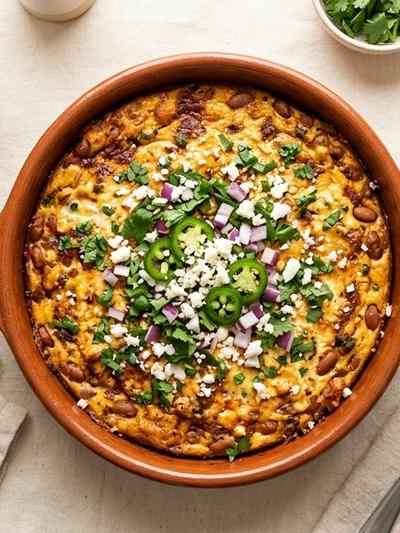
This one-pot chile colorado delivers 33 grams of protein and only 348 calories per generous bowl, making it one of the most nutrient-dense Mexican dinners you can prepare on a weeknight. Pork tenderloin provides the lean protein foundation, while pinto beans add another 7 grams of plant protein plus 6 grams of fiber per serving. The zucchini contributes bulk and potassium without adding significant calories, and the dried chile sauce brings iron and vitamins A and C from the ancho and guajillo peppers.
Chile colorado is one of Mexico's great home-cooking traditions — a silky, brick-red sauce made from rehydrated dried chiles, toasted with garlic and cumin. The ancho chiles bring a deep, raisin-like sweetness, while the guajillo adds bright, tangy heat without overwhelming the palate. Together they create a complex sauce that coats the tender pork cubes and soaks into the soft zucchini and creamy pinto beans. A squeeze of fresh lime at the table lifts every element.
The one-pot format means this entire dinner comes together in a single skillet with minimal cleanup. For GLP-1 users, the thick, stew-like consistency makes each spoonful feel substantial — you get the satisfaction of a hearty bowl without excessive volume that could overwhelm a reduced appetite. The gentle spice level sits well with slower gastric emptying, and the soft-cooked vegetables are easy to digest.
Why This Works on GLP-1
Each serving provides 33 grams of protein from two complementary sources — pork tenderloin and pinto beans — which matters significantly for preserving lean muscle mass during GLP-1-assisted weight loss. Research consistently shows that adequate protein intake becomes even more critical when appetite is reduced, because the body needs amino acids to maintain muscle tissue regardless of how much you eat. Whether you are on Mounjaro or another GLP-1 receptor agonist, hitting 30+ grams of protein at dinner helps protect against the muscle loss that can accompany rapid weight reduction. The combination of animal and plant protein also provides a more complete amino acid profile than either source alone.
The 9 grams of fiber per serving come primarily from the pinto beans and zucchini, promoting steady blood sugar response and supporting the gut microbiome. Dried chiles themselves contribute a small amount of fiber as well. Importantly, this is a moderate fiber load — enough to support regularity without the bloating risk that very high-fiber meals can cause when gastric emptying is already slowed by medication.
At 348 calories and only 8 grams of fat per serving, this dish fits comfortably into a calorie-controlled day while still feeling like a real, satisfying dinner. The low fat content means it moves through the stomach more easily than cheese-heavy Mexican dishes, reducing the nausea risk that high-fat meals can trigger on GLP-1 medications. The natural capsaicin in the dried chiles may also provide a mild thermogenic effect, though the primary benefit here is flavor depth without added fat.
Ingredients (serves 4)
For the chile colorado sauce:
- 3 dried ancho chiles, stemmed and seeded
- 2 dried guajillo chiles, stemmed and seeded
- 1 cup (240ml) boiling water
- 2 cloves garlic, peeled
- 1/2 teaspoon ground cumin
- 1/2 teaspoon dried Mexican oregano
- 1/4 teaspoon fine sea salt
- 1 tablespoon apple cider vinegar
For the pork and vegetables:
- 1 lb (450g) pork tenderloin, trimmed and cut into 1-inch cubes
- 1/4 teaspoon fine sea salt
- 1/4 teaspoon black pepper
- 2 teaspoons olive oil
- 1 medium yellow onion, diced (about 1 cup / 150g)
- 2 medium zucchini, quartered lengthwise and sliced into 1/2-inch pieces (about 3 cups / 360g)
- 1 can (15 oz / 425g) pinto beans, drained and rinsed
- 1/2 cup (120ml) low-sodium chicken broth
- 1 tablespoon fresh lime juice
For serving:
- 2 tablespoons fresh cilantro, roughly chopped
- 1 lime, cut into wedges
- 2 tablespoons plain nonfat Greek yogurt (optional)
Instructions
Prepare the chile sauce:
Toast the stemmed and seeded ancho and guajillo chiles in a dry skillet over medium heat for about 60 seconds per side, pressing them flat with a spatula, until they become fragrant and slightly pliable. This step activates the oils in the chile skins and deepens the sauce flavor considerably — skip it and the sauce will taste flat.
Transfer the toasted chiles to a heat-safe bowl and pour the boiling water over them. Press them down so they are submerged and let them soak for 15 minutes while you prepare the other ingredients. The chiles should become soft and deeply colored.
Transfer the soaked chiles and their soaking liquid to a blender. Add the garlic, cumin, oregano, salt, and apple cider vinegar. Blend on high for 60 to 90 seconds until completely smooth. The sauce should be thick and glossy, with no visible chile skin pieces. Set aside.
Cook the pork and build the dish:
Pat the pork cubes dry with paper towels and season with salt and pepper. Moisture on the surface of the meat prevents browning, so this step matters for both flavor and texture.
Heat the olive oil in a large, deep skillet or Dutch oven over medium-high heat. Add the pork cubes in a single layer, leaving space between them, and sear without moving for 2 to 3 minutes until golden brown on the bottom. Flip and sear the second side for another 2 minutes. The pork does not need to be cooked through — it will finish in the sauce. Transfer to a plate.
Reduce the heat to medium. Add the diced onion to the same skillet and cook for 3 to 4 minutes, stirring occasionally, until softened and translucent. Scrape up any browned bits from the pork — these add significant depth to the final dish.
Pour the blended chile sauce into the skillet and stir to combine with the onions. Let it simmer for 2 minutes, stirring frequently. The sauce will darken slightly and become fragrant as the raw garlic and spice flavors cook out.
Add the chicken broth and stir until the sauce reaches a smooth, pourable consistency. Return the seared pork and any accumulated juices to the skillet. Add the sliced zucchini and drained pinto beans. Stir gently to coat everything in the sauce.
Bring to a gentle simmer, then reduce the heat to medium-low. Cover and cook for 12 to 15 minutes, stirring once halfway through, until the pork is cooked through (internal temperature of 145°F / 63°C) and the zucchini is tender but still holds its shape. The sauce will thicken as it simmers — if it gets too thick, add a splash of broth.
Remove from heat, stir in the lime juice, and taste for seasoning. The lime brightens the earthy chile sauce and ties the dish together. Serve in shallow bowls, topped with chopped cilantro, a wedge of lime, and a small dollop of Greek yogurt if desired.
Nutrition per Serving
| Nutrient | Amount (approx.) |
|---|---|
| Calories | ~348 kcal |
| Protein | ~33g |
| Fat | ~8g |
| Carbohydrates | ~34g |
| Fiber | ~9g |
Estimates based on 4 oz pork tenderloin, 1/2 cup pinto beans, and 3/4 cup zucchini per serving, using USDA nutrient data. Optional Greek yogurt garnish not included.
Practical Notes
Meal prep storage. This chile colorado refrigerates exceptionally well — the flavors actually improve overnight as the sauce continues to penetrate the pork and beans. Store in airtight containers for up to 4 days. Reheat gently in a covered skillet with a tablespoon of water or broth to restore the sauce consistency. The zucchini softens slightly after refrigeration but remains pleasant in texture.
Chile selection and heat level. Ancho and guajillo chiles are mild to medium on the heat scale, making this dish GLP-1-friendly. If you are particularly sensitive to spice during the early weeks of medication, use 3 ancho chiles and skip the guajillo entirely — anchos are the mildest common dried chile. For more heat, add one dried chile de árbol to the soaking water, but start small.
Protein boost. If you need more protein per serving, increase the pork tenderloin to 1.25 lbs (570g) — this raises the protein to approximately 39 grams per serving while adding only about 30 calories. You can also stir in 2 tablespoons of nonfat Greek yogurt per bowl at serving time for an extra 3 grams of protein and a cooling contrast to the warm chile sauce.
Pork substitution. Chicken breast works equally well here — cut it into 1-inch pieces and follow the same searing and simmering instructions. Turkey tenderloin is another lean option. Both will cook in the same timeframe. For a plant-based version, use 14 oz extra-firm tofu, pressed and cubed, though you will want to sear it slightly longer to develop a golden crust.
Serving for smaller appetites. This recipe divides easily into 6 smaller portions at roughly 232 calories and 22 grams of protein each — still a meaningful protein contribution for a lighter dinner. Serve in a smaller bowl to avoid the visual cue of a half-empty plate, and pair with a few corn tortilla chips on the side if you can tolerate the crunch.
Frequently Asked Questions
Will the dried chile sauce upset my stomach on GLP-1 medication?
Can I use canned enchilada sauce instead of making the chile sauce from scratch?
How should I reheat this for meal prep lunches at work?
What if I can only eat a very small portion right now?
Where do I find dried ancho and guajillo chiles?
This article provides general food and nutrition guidance only. It does not constitute medical advice. Always consult your healthcare provider regarding your GLP-1 medication and individual nutritional needs.