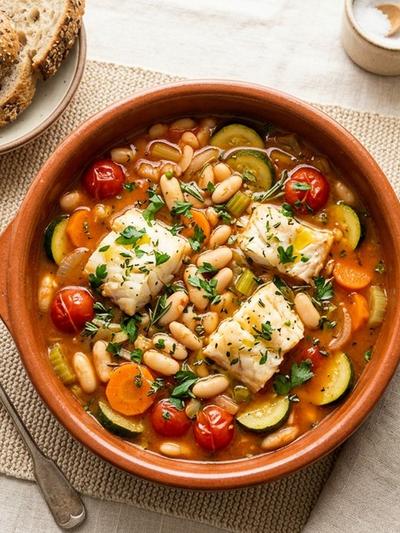
With 38 grams of protein and just 355 calories per serving, this Tuscan one-pot chicken delivers serious nutritional density from three complementary protein sources: lean chicken breast, cannellini beans, and a finish of Parmesan. The combination of animal and plant protein provides a full spectrum of amino acids essential for preserving lean muscle mass during weight loss. Eight grams of fiber per serving — primarily from the beans and lacinato kale — supports steady blood sugar and lasting fullness without excess volume.
The flavor here is unmistakably Tuscan: garlic mellowed in olive oil, rosemary that perfumes the whole pan, and sun-dried tomatoes that dissolve into the broth to create a savory, slightly sweet backbone. Cherry tomatoes burst during cooking and mingle with the starchy liquid released by the cannellini beans, forming a silky sauce that coats every piece of chicken. A squeeze of lemon at the end lifts everything and keeps the dish tasting bright rather than heavy.
Because the entire meal cooks in a single skillet, cleanup is minimal — a real advantage on evenings when appetite is already reduced and the motivation to cook a multi-component dinner is low. The small but nutrient-dense portions deliver concentrated satisfaction, and the soft textures of braised beans and wilted kale are gentle on a digestive system slowed by GLP-1 medication. Leftovers reheat beautifully, making this a natural candidate for tomorrow's lunch as well.
Why This Works on GLP-1
Preserving lean muscle mass is one of the most important nutritional priorities during GLP-1-assisted weight loss. Research consistently shows that adequate protein intake — ideally 25 to 40 grams per meal — helps counteract the muscle loss that can accompany rapid weight reduction on medications like Mounjaro. This recipe delivers 38 grams per serving, with the majority coming from chicken breast and a meaningful contribution from cannellini beans. The dual-source approach means you absorb a more complete amino acid profile than chicken alone would provide.
The 8 grams of fiber per serving come primarily from cannellini beans and lacinato kale, both of which are well-tolerated by most GLP-1 users. Unlike raw cruciferous vegetables or very high-fiber legumes like black beans, cannellini beans have a creamy, soft texture when heated that digests gently. The kale wilts completely into the broth, losing the toughness that can cause discomfort when eaten raw.
At only 10 grams of fat per serving, this dish avoids the heaviness that often triggers nausea for Wegovy users during dose escalation. The small amount of olive oil provides enough richness for flavor and helps with absorption of fat-soluble vitamins from the kale, without overwhelming a sensitive stomach. The moderate carbohydrate content — 25 grams per serving — comes almost entirely from whole-food sources that release energy gradually.
Ingredients (serves 4)
For the chicken and aromatics:
- 1¼ lb (560g) boneless, skinless chicken breast, cut into 1-inch (2.5cm) pieces
- 1½ tablespoons extra-virgin olive oil
- 1 medium yellow onion, diced
- 4 cloves garlic, thinly sliced
- ⅓ cup (30g) sun-dried tomatoes (dry-packed, not oil-packed), roughly chopped
- 1 tablespoon fresh rosemary, finely chopped (or 1 teaspoon dried)
- 1 teaspoon fresh thyme leaves (or ½ teaspoon dried)
- ¼ teaspoon red pepper flakes (optional)
- ½ teaspoon fine sea salt
- ¼ teaspoon black pepper
For the beans and greens:
- 1 can (15 oz / 425g) cannellini beans, drained and rinsed
- 1 cup (240ml) low-sodium chicken broth
- 1 cup (150g) cherry tomatoes, halved
- 6 cups (200g) lacinato kale, stems removed, roughly chopped
- 1 tablespoon fresh lemon juice
- 2 tablespoons finely grated Parmesan cheese (for serving)
Instructions
Season and sear the chicken:
Pat the chicken pieces dry with paper towels and season with the salt and pepper. Dry chicken sears rather than steams, which builds flavor through browning — this step matters more than any spice you add later.
Heat the olive oil in a large, deep skillet or Dutch oven over medium-high heat until it shimmers. Add the chicken in a single layer, leaving space between pieces, and cook undisturbed for 3 to 4 minutes until golden brown on the underside. Flip and sear the other side for 2 minutes. The chicken does not need to be cooked through at this stage. Transfer to a plate and set aside.
Build the aromatic base:
Reduce the heat to medium. Add the diced onion to the same skillet and cook for 3 to 4 minutes, stirring occasionally, until softened and translucent. The browned bits left by the chicken will dissolve into the onion — this is where the dish gets its deep savory character.
Add the sliced garlic, sun-dried tomatoes, rosemary, thyme, and red pepper flakes. Stir constantly for about 60 seconds, until the garlic is fragrant but not browned. Sun-dried tomatoes begin to soften and release their concentrated sweetness into the oil almost immediately.
Simmer with beans and tomatoes:
Pour in the chicken broth, scraping the bottom of the skillet with a wooden spoon to lift any remaining fond. Add the drained cannellini beans and halved cherry tomatoes. Stir to combine and bring to a gentle simmer.
Return the seared chicken and any accumulated juices to the skillet, nestling the pieces into the beans and broth. Cover and simmer over medium-low heat for 10 minutes, until the chicken is cooked through (internal temperature of 165°F / 74°C) and the cherry tomatoes have collapsed into the sauce.
Finish with kale and lemon:
Remove the lid and add the chopped kale in two batches, stirring each batch into the hot liquid until it wilts — this takes about 2 minutes total. The kale shrinks dramatically, so even 6 cups of raw leaves will fit easily once the first batch collapses.
Stir in the lemon juice, taste, and adjust salt and pepper as needed. The lemon should brighten the dish without making it overtly citrusy — start with one tablespoon and add more if you like.
Divide among four shallow bowls and top each serving with half a tablespoon of grated Parmesan. Serve immediately.
Nutrition per Serving
| Nutrient | Amount (approx.) |
|---|---|
| Calories | ~355 kcal |
| Protein | ~38g |
| Fat | ~10g |
| Carbohydrates | ~25g |
| Fiber | ~8g |
Estimates based on USDA values for raw boneless skinless chicken breast, canned cannellini beans (drained), lacinato kale, dry-packed sun-dried tomatoes, and extra-virgin olive oil. Actual values may vary with specific brands and portion sizes.
Practical Notes
This reheats better than most chicken dishes. The cannellini beans release starch into the broth as the leftovers sit in the fridge, so when you reheat a portion the next day, the sauce is even silkier than it was fresh. Add a splash of broth or water when reheating to loosen it. Refrigerated leftovers keep well for up to 4 days in an airtight container.
Use lacinato (dinosaur) kale, not curly. Lacinato kale wilts into a tender, almost silky texture that works with the soft beans and chicken. Curly kale holds its structure more stubbornly and can feel chewy in a braise like this. If curly is all you can find, chop it finer and add it a minute earlier.
Dry-packed sun-dried tomatoes are worth seeking out. Oil-packed sun-dried tomatoes add unnecessary fat and can make the dish greasy. Dry-packed tomatoes rehydrate in the cooking broth and deliver the same concentrated tomato flavor with a fraction of the calories. Look for them in the produce section or next to the canned tomatoes.
Start with a smaller portion if you are in early dose titration. Serve yourself half a portion — roughly ¾ cup — and eat slowly. You can always go back for more if appetite allows. The high protein density means even a half portion delivers nearly 19 grams of protein, which still makes a meaningful contribution to your daily target.
Swap the chicken for thighs if you prefer darker meat. Boneless, skinless chicken thighs work well here and are more forgiving if slightly overcooked. They contain about 2 to 3 more grams of fat per serving, which brings the total calories to roughly 380 — still well under 400. Reduce the searing time by about a minute since thighs are thinner.
Frequently Asked Questions
Can I eat this during the first few weeks of starting GLP-1 medication?
What can I substitute for cannellini beans?
How should I store and reheat leftovers?
How do I adjust this recipe if I can only eat very small amounts?
Can I make this in a Dutch oven instead of a skillet?
This article provides general food and nutrition guidance only. It does not constitute medical advice. Always consult your healthcare provider regarding your GLP-1 medication and individual nutritional needs.