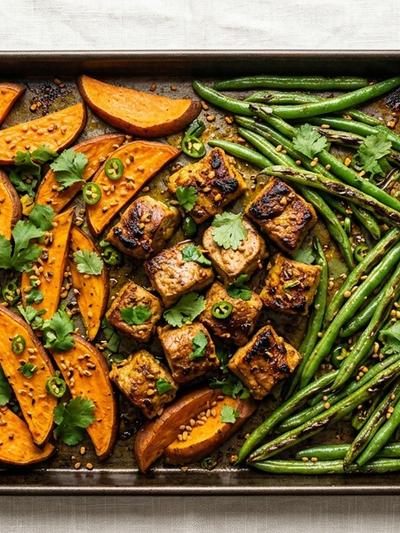
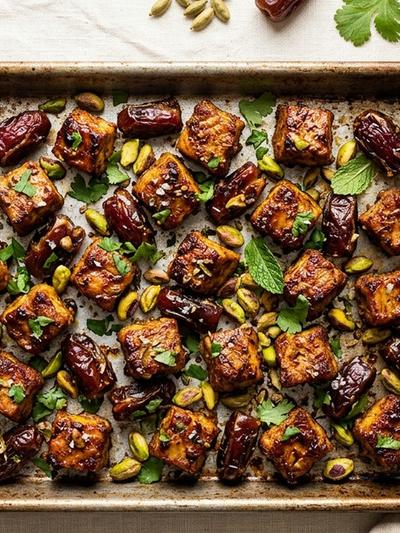
This sheet pan lunch delivers 38 grams of protein per serving from a combination of lean pork tenderloin, chickpeas, and a cooling yogurt finish. The cumin-coriander spice blend brings warmth without heaviness, while roasted cauliflower and chickpeas contribute fiber and complex carbohydrates. At under 400 calories per plate, this is a complete, balanced meal that requires almost no hands-on work once it goes into the oven.
The spice profile here is built on three pillars: toasted cumin for earthy depth, ground coriander for citrusy brightness, and a touch of turmeric for its signature golden color and subtle bitterness. Roasting cauliflower at high heat caramelizes its edges into nutty, crispy bits that contrast beautifully with the tender pork. A quick squeeze of lemon and a drizzle of cool yogurt at the end tie every element together and cut through the roasted richness.
For GLP-1 users, this recipe works on multiple levels. The high protein content keeps you satisfied even when portions feel smaller than pre-medication days. The sheet pan format means one pan, minimal cleanup, and no standing over a stove — a real advantage on days when your appetite is unpredictable and cooking motivation is low.
Why This Works on GLP-1
Pork tenderloin is one of the leanest cuts of meat available, delivering roughly 28 grams of protein per five-ounce serving with only 3.5 grams of fat. Preserving lean muscle mass is one of the most important nutritional priorities during GLP-1-assisted weight loss, and meals like this make hitting daily protein targets straightforward. For people taking Mounjaro or similar GLP-1 medications, the combination of lean animal protein and plant-based protein from chickpeas provides a more complete amino acid profile than either source alone. This dual-protein approach also helps sustain satiety through slower digestion of the legume component.
The cauliflower and chickpeas together provide about 7 grams of fiber per serving — enough to support digestive regularity without the bloating risk that comes from very high-fiber meals. Because GLP-1 medications slow gastric emptying, moderate fiber is the sweet spot: enough to keep things moving, not so much that it causes discomfort.
The spices in this recipe are not just for flavor — cumin and coriander are traditionally used in Indian cooking partly for their digestive properties. Turmeric provides curcumin, a well-studied anti-inflammatory compound. These gentle, warming spices work well for GLP-1 users who find that heavily spiced or very rich foods cause nausea, because they add depth without heat or greasiness.
Ingredients (serves 4)
For the spice blend:
- 2 teaspoons ground cumin
- 1½ teaspoons ground coriander
- 1 teaspoon turmeric
- ½ teaspoon smoked paprika
- ½ teaspoon garlic powder
- ½ teaspoon fine sea salt
- ¼ teaspoon black pepper
For the sheet pan:
- 1¼ pounds (570g) pork tenderloin, trimmed and cut into 1-inch medallions
- 1 medium head cauliflower (about 1¼ pounds / 570g), cut into small florets
- 1 can (15 oz / 425g) chickpeas, drained and rinsed
- 1 medium red onion, cut into thin wedges
- 1 large red bell pepper, cut into 1-inch pieces
- 1 tablespoon (15ml) avocado oil or olive oil
- 1 tablespoon (15ml) fresh lemon juice
For serving:
- ⅓ cup (80g) plain nonfat Greek yogurt
- 1 tablespoon (15ml) fresh lemon juice
- 2 tablespoons fresh cilantro, roughly chopped
- Lemon wedges
Instructions
Prepare the spice blend and preheat:
- Preheat your oven to 425°F (220°C) and line a large rimmed sheet pan with parchment paper. The high heat is essential for caramelizing the cauliflower edges and getting color on the pork without drying it out.
- Combine all spice blend ingredients in a small bowl and stir to mix evenly. This pre-mixed blend ensures every ingredient gets consistent seasoning.
Season and arrange the sheet pan:
- Pat the pork medallions dry with paper towels. Dry surfaces sear better in the oven, giving you more flavor and better texture.
- Place the cauliflower florets, chickpeas, red onion wedges, and bell pepper pieces on the prepared sheet pan. Drizzle with the oil and sprinkle with about two-thirds of the spice blend. Toss everything with your hands until evenly coated.
- Push the vegetables to the outer edges of the pan, creating space in the center. Season the pork medallions with the remaining spice blend on both sides and arrange them in a single layer in the center of the pan, leaving a little space between each piece.
Roast:
- Roast for 12 minutes, then remove the pan and flip the pork medallions. Stir the vegetables gently to promote even browning. Return to the oven for another 10 to 12 minutes, until the pork reaches an internal temperature of 145°F (63°C) and the cauliflower is golden-brown at the edges.
- Remove from the oven and squeeze the tablespoon of lemon juice over the entire pan while everything is still hot. The acid brightens all the roasted flavors immediately. Let the pork rest on the pan for 3 minutes before serving.
Assemble and serve:
- Stir together the Greek yogurt and the second tablespoon of lemon juice in a small bowl. Divide the pork and roasted vegetables among four plates. Drizzle each serving with a spoonful of the lemon yogurt and scatter fresh cilantro over the top. Serve with lemon wedges on the side.
Nutrition per Serving
| Nutrient | Amount (approx.) |
|---|---|
| Calories | ~385 kcal |
| Protein | ~38g |
| Fat | ~12g |
| Carbohydrates | ~28g |
| Fiber | ~7g |
Estimates based on 1¼ pounds trimmed pork tenderloin, one 15-oz can chickpeas, and nonfat Greek yogurt, divided equally among four servings.
Practical Notes
Meal prep storage. This recipe stores well for up to 4 days in airtight containers in the refrigerator. Keep the yogurt drizzle in a separate small container and add it fresh when reheating. The pork and vegetables reheat best in a 375°F oven for 8 to 10 minutes — microwaving works but softens the cauliflower edges.
Pork tenderloin thickness matters. Cut your medallions to a consistent 1-inch thickness so they cook evenly. If the tapered end of the tenderloin is thinner, fold it under itself and secure with a toothpick, or simply add those thinner pieces to the pan a few minutes later than the rest.
Substitute the protein if needed. Boneless, skinless chicken thighs work as a direct swap — cut them into 1-inch pieces and roast for the same time. Turkey tenderloin is another lean option. Both maintain the high-protein profile without changing the spice blend.
Start with half a portion if appetite is low. On days when Wegovy or other GLP-1 medications suppress your appetite more than usual, plate half a serving and refrigerate the rest. The leftovers reheat well, so nothing goes to waste. A half portion still provides about 19 grams of protein.
Customize the vegetable mix. Sweet potato cubes, zucchini rounds, or diced butternut squash can replace some or all of the cauliflower. Keep the pieces roughly the same size for even roasting. Note that starchy vegetables like sweet potato will increase the carbohydrate count by about 10 to 15 grams per serving.
Frequently Asked Questions
Is pork tenderloin safe to eat on GLP-1 medications?
Can I make this without chickpeas for a lower-carb version?
How long does this keep in the refrigerator, and can I freeze it?
What if I can only eat very small amounts right now?
Can I use a different spice blend if I do not have all these spices?
This article provides general food and nutrition guidance only. It does not constitute medical advice. Always consult your healthcare provider regarding your GLP-1 medication and individual nutritional needs.