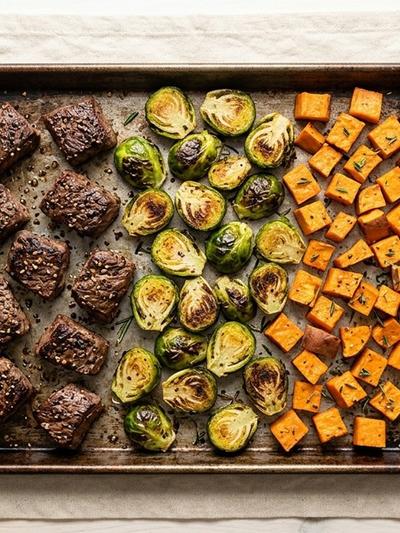
This sheet pan dinner delivers 38 grams of protein per serving from lean sirloin steak paired with chickpeas, making it a serious protein source for anyone prioritizing muscle preservation during weight loss. The combination of beef and legumes provides complete amino acids alongside iron, zinc, and B12 — nutrients that can become depleted when eating smaller portions over time. A full head of cauliflower roasts on the same pan, adding bulk and cruciferous nutrients without significant calories.
Za'atar — the Middle Eastern blend of dried thyme, oregano, sumac, and sesame seeds — transforms simple roasted beef and vegetables into something deeply aromatic. The sumac in the blend provides a citrusy tang that cuts through the richness of the meat, while toasted sesame seeds add subtle nuttiness. Cherry tomatoes burst in the oven heat and create a natural sauce that pools around the cauliflower and chickpeas, tying everything together.
For GLP-1 users, this is an ideal dinner format: high protein concentrated into a modest portion, with enough fiber from chickpeas and cauliflower to support digestion without overwhelming a sensitive stomach. The sheet pan method means minimal hands-on time and almost no cleanup — practical advantages when reduced appetite makes elaborate cooking feel like wasted effort.
Why This Works on GLP-1
Each serving provides 38 grams of protein primarily from lean sirloin steak, which is critical for preserving lean muscle mass during GLP-1-assisted weight loss. Research consistently shows that people on medications like Mounjaro or Wegovy can lose muscle along with fat if protein intake drops too low. Aiming for 25–45 grams per meal helps counteract this, and this dish hits that range without requiring enormous portions. The chickpeas contribute an additional 6 grams of plant protein, rounding out the amino acid profile.
The 7 grams of fiber per serving comes from cauliflower and chickpeas — both gentle enough for most GLP-1 users. Cauliflower is lower in fermentable carbohydrates than many cruciferous vegetables when roasted, which breaks down some of the compounds that cause bloating. This makes it a safer choice than raw broccoli or cabbage for people experiencing the slowed gastric emptying common with GLP-1 medications.
Sirloin is one of the leanest cuts of beef available, keeping total fat to 17 grams per serving — well below a typical steak dinner. The small amount of tahini in the drizzle provides heart-healthy unsaturated fats and adds calcium, a mineral worth paying attention to when overall food intake is reduced.
Ingredients (serves 4)
For the za'atar beef and vegetables:
- 1¼ lb (560g) beef sirloin steak, trimmed of visible fat, about 1 inch thick
- 1 large head cauliflower, cut into bite-sized florets (about 5 cups / 500g)
- 1 can (15 oz / 425g) chickpeas, drained and rinsed
- 1 pint (280g) cherry tomatoes
- 1 medium red onion, cut into 8 wedges
- 2 tablespoons za'atar spice blend
- 1 tablespoon extra-virgin olive oil
- ½ teaspoon fine sea salt
- ¼ teaspoon black pepper
For the lemon-tahini drizzle:
- 2 tablespoons (30g) tahini
- 2 tablespoons fresh lemon juice (about 1 lemon)
- 1 small clove garlic, finely grated
- 2–3 tablespoons cold water
- Pinch of salt
For serving:
- 2 tablespoons fresh flat-leaf parsley, roughly chopped
- Lemon wedges
Instructions
Prepare the pan and preheat:
Position a rack in the upper third of the oven and preheat to 425°F (220°C). Line a large rimmed sheet pan (18×13 inches) with parchment paper. The high heat is important — it creates browning on the beef and caramelization on the vegetables rather than steaming them.
Pat the sirloin steak dry with paper towels. This removes surface moisture so the za'atar crust adheres properly and the meat sears rather than steams in the oven.
Season and arrange the sheet pan:
In a large bowl, toss the cauliflower florets, drained chickpeas, cherry tomatoes, and red onion wedges with the olive oil, half of the za'atar (1 tablespoon), salt, and pepper. Spread them in a single layer on the prepared sheet pan, leaving a space in the center for the steak.
Rub the remaining tablespoon of za'atar over both sides of the sirloin, pressing it into the surface. Place the steak in the center of the pan, directly on the parchment, surrounded by the vegetables.
Roast:
Roast for 12 minutes, then flip the steak and stir the vegetables around it. Continue roasting for another 8–12 minutes, depending on thickness, until an instant-read thermometer inserted into the thickest part reads 130°F (54°C) for medium-rare or 140°F (60°C) for medium. The cherry tomatoes should be blistered and some cauliflower edges should be golden brown.
Transfer the steak to a cutting board and let it rest for 5 minutes. Resting allows the juices to redistribute — cutting too early means drier meat. Leave the vegetables on the pan; they will stay warm.
Make the lemon-tahini drizzle:
- While the steak rests, whisk together the tahini, lemon juice, grated garlic, and a pinch of salt in a small bowl. Add cold water one tablespoon at a time, whisking until the sauce reaches a pourable consistency. It will seize up at first — keep whisking and adding water until it becomes smooth and drizzleable.
Slice and serve:
Slice the sirloin against the grain into thin strips, about ¼ inch thick. Cutting against the grain shortens the muscle fibers, making each bite more tender — especially important for lean cuts like sirloin.
Divide the roasted vegetables and chickpeas among four plates. Fan the sliced sirloin on top, drizzle with the lemon-tahini sauce, and scatter with fresh parsley. Serve with lemon wedges for squeezing over at the table.
Nutrition per Serving
| Nutrient | Amount (approx.) |
|---|---|
| Calories | ~415 kcal |
| Protein | ~38g |
| Fat | ~17g |
| Carbohydrates | ~28g |
| Fiber | ~7g |
Estimates based on USDA data for trimmed beef sirloin, canned chickpeas, and standard tahini. Actual values may vary with steak marbling and specific brands used.
Practical Notes
This meal preps well for 3 days. Store sliced beef and roasted vegetables in separate airtight containers in the refrigerator. Keep the tahini drizzle in a small jar — it thickens when cold but loosens again with a splash of water and a quick stir. Reheat the beef and vegetables gently in a 350°F oven for 8 minutes to avoid toughening the meat.
Za'atar varies between brands. Some blends are heavier on sumac (more tart), while others lean toward sesame. Taste your blend before seasoning — if it's very salty, reduce the added salt. If you cannot find za'atar, combine 1 tablespoon dried thyme with 1 teaspoon ground sumac and 1 teaspoon toasted sesame seeds as a reasonable substitute.
Flank steak works as a swap. If sirloin is unavailable, flank steak is equally lean and takes well to high-heat roasting. Slice it thinner after resting since the grain runs differently. Top round is another budget-friendly option, though it benefits from slightly shorter cooking to avoid toughness.
Start with a smaller portion if you are early in your GLP-1 journey. Plate one-third of a standard serving and eat slowly. You can always return for more, but pushing past fullness on Ozempic or similar medications often leads to nausea. The leftovers keep well, so nothing is wasted.
Roast the chickpeas until crispy for better texture. If you prefer crunchier chickpeas, pat them very dry after draining and spread them in a single layer with space between each one. They will crisp up in the oven heat and add a satisfying textural contrast to the tender beef and soft cauliflower.
Frequently Asked Questions
I feel full very quickly on my GLP-1 medication — how should I approach this dinner?
Can I make this with ground beef instead of sirloin steak?
How long does this keep in the fridge, and can I freeze it?
What if I am on Zepbound and experiencing acid reflux from the tomatoes?
My za'atar crust keeps falling off the steak — what am I doing wrong?
This article provides general food and nutrition guidance only. It does not constitute medical advice. Always consult your healthcare provider regarding your GLP-1 medication and individual nutritional needs.