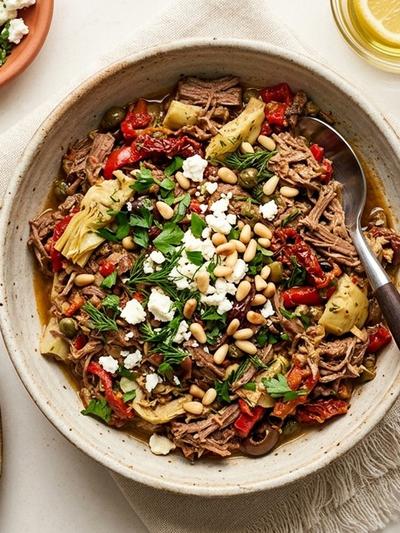
Each snack-sized serving of this slow cooker dip delivers roughly 27 grams of protein and just 215 calories, making it one of the most efficient protein-per-calorie snacks you can batch-prep. The foundation is pork tenderloin — one of the leanest cuts available at around 3 grams of fat per 100 grams — slow braised until it shreds effortlessly, then folded into tender cannellini beans that have cooked down into a creamy, spreadable base. Add lemon zest, smashed garlic, and dried oregano, and you have eight servings of grab-and-go protein ready for the week.
The flavor here is distinctly Greek without being complicated. Four hours in the slow cooker lets the garlic mellow into something sweet and nutty, while the oregano permeates the pork with that unmistakable Mediterranean warmth. The lemon juice stirred in at the end lifts everything with brightness, cutting through the richness of the beans and keeping each bite clean and appetizing. The texture falls somewhere between a chunky hummus and a rustic rillette — substantial enough to scoop with a cucumber round, smooth enough to spread on an endive leaf.
This format works particularly well for GLP-1 users because it removes every barrier between you and protein. When your appetite window is small, having a container of this dip in the fridge means you can eat 27 grams of protein in five minutes with zero cooking. The soft, mashed texture is gentle on a slower digestive system, and the portion size — roughly a third of a cup — feels satisfying without overwhelming a reduced stomach capacity.
Why This Works on GLP-1
Preserving lean muscle mass is one of the most important nutritional priorities during GLP-1-assisted weight loss, and it requires consistent protein intake throughout the day — not just at main meals. This dip provides 27 grams of complete protein per serving, almost entirely from pork tenderloin, which contains all essential amino acids in the ratios your body needs for muscle protein synthesis. For Mounjaro users experiencing significant appetite suppression, a high-protein snack like this ensures you meet your daily target even when full meals feel like too much. Spreading protein across snacks and meals also supports more stable blood sugar levels, complementing the glucose-regulating effects of tirzepatide.
The cannellini beans contribute both plant-based protein and gentle soluble fiber, which helps maintain digestive regularity — a common concern for people on GLP-1 medications. The beans break down into a smooth, easily digestible texture during the long cooking time, which means less work for a stomach that is emptying more slowly than usual. Unlike raw legumes or high-fiber supplements, these well-cooked beans are unlikely to cause bloating or discomfort.
The overall macronutrient profile — high protein, moderate carbohydrate, low fat — aligns with what research suggests works best alongside GLP-1 therapy. With only 7 grams of fat per serving, this dip avoids the heavy, greasy quality that can trigger nausea in Zepbound users during dose adjustments. The olive oil provides just enough healthy monounsaturated fat to carry the flavors and support absorption of fat-soluble nutrients, without tipping the balance toward something that sits too heavily.
Ingredients (serves 8)
For the slow cooker:
- 2 lb (900g) pork tenderloin, trimmed and cut into 3 equal pieces
- 1 can (15 oz / 425g) cannellini beans, drained and rinsed
- 4 cloves garlic, smashed and peeled
- 1/2 cup (120ml) low-sodium chicken broth
- 2 tsp dried oregano
- 1/2 tsp fine sea salt
- 1/4 tsp black pepper
- Zest of 1 medium lemon (reserve the juice)
To finish:
- 2 tbsp (30ml) extra-virgin olive oil
- Juice of 1 medium lemon (about 2 tbsp / 30ml)
- 2 tbsp chopped fresh oregano or flat-leaf parsley
For serving (not included in nutrition):
- Cucumber rounds, bell pepper strips, carrot sticks
- Optional: crumbled feta, pitted kalamata olives, pinch of red pepper flakes
Instructions
Set up the slow cooker:
- Pat the pork tenderloin pieces dry with paper towels. Season all sides with the dried oregano, salt, and pepper, pressing the herbs into the surface so they adhere during cooking.
- Scatter the drained cannellini beans and smashed garlic across the bottom of your slow cooker — this creates a bed that prevents the pork from sticking and lets the beans absorb flavor from the meat drippings.
- Nestle the seasoned pork on top of the beans. Pour the chicken broth over everything and scatter the lemon zest on top. The small amount of liquid is intentional — you want a concentrated, flavorful result, not a watery broth.
- Cover and cook on LOW for 3.5 to 4 hours, until the pork shreds easily with a fork. The internal temperature should read at least 145°F (63°C), but most slow cookers will bring it well past that.
Make the dip:
- Transfer the pork pieces to a cutting board. Using two forks, shred the meat into small strands — the finer you shred, the smoother the final dip.
- In the slow cooker, use a potato masher or the back of a fork to partially mash the beans and softened garlic. Leave some beans whole for texture — you want a rustic, chunky consistency, not a purée.
- Return the shredded pork to the slow cooker. Add the lemon juice and olive oil. Stir everything together until the pork is evenly distributed through the bean mixture.
- Taste and adjust seasoning. The lemon juice should be bright but not sour — add more salt if needed to balance the acidity.
- Transfer to a serving bowl and scatter the fresh oregano or parsley over the top. Serve warm or at room temperature with vegetable crudités for dipping.
Nutrition per Serving
| Nutrient | Amount (approx.) |
|---|---|
| Calories | ~215 kcal |
| Protein | ~27g |
| Fat | ~7g |
| Carbohydrates | ~8g |
| Fiber | ~2g |
Calculated for 1/8 of the dip (approximately 1/3 cup), based on 2 lb pork tenderloin, 1 can cannellini beans, and 2 tbsp olive oil. Vegetable crudités for serving are not included.
Practical Notes
Storage and meal prep. This dip keeps well in airtight containers in the refrigerator for up to 5 days. Divide into individual portions — small mason jars or snack containers work perfectly — so you can grab one serving at a time without reheating the whole batch. It also freezes well for up to 2 months; thaw overnight in the fridge before eating.
Serving temperature is flexible. This dip is excellent warm straight from the slow cooker, at room temperature after an hour of cooling, or cold from the fridge the next day. The texture firms up slightly when chilled, making it easier to scoop with cucumber rounds. If you prefer it warm, microwave individual portions for 30 to 45 seconds.
Boost the fiber with your dippers. The dip itself is moderate in fiber, so pair it with high-fiber vegetables — bell pepper strips, carrot sticks, and jicama rounds all add 2 to 3 grams of fiber per serving of crudités. This combination gives you protein from the dip and fiber from the vegetables, covering two of the most important nutritional needs on GLP-1 therapy.
Protein substitution. Boneless, skinless chicken breast works as a direct swap if pork is not available — use the same weight and cooking time. Turkey tenderloin also works but tends to be slightly drier, so add an extra two tablespoons of broth to compensate. The protein content will stay nearly identical with either substitution.
Portion control for early-phase users. If you are in the first weeks of Mounjaro or another GLP-1 medication and find even a third-cup serving too large, halve it. A half-portion still provides roughly 14 grams of protein, which is meaningful — and you can always go back for more if your appetite allows.
Frequently Asked Questions
Is this dip too heavy for days when my GLP-1 medication causes nausea?
Can I use a different type of white bean?
How long does this dip last in the fridge, and can I freeze it?
What if I can only eat very small amounts right now?
Can I use the HIGH setting on my slow cooker to speed this up?
This article provides general food and nutrition guidance only. It does not constitute medical advice. Always consult your healthcare provider regarding your GLP-1 medication and individual nutritional needs.