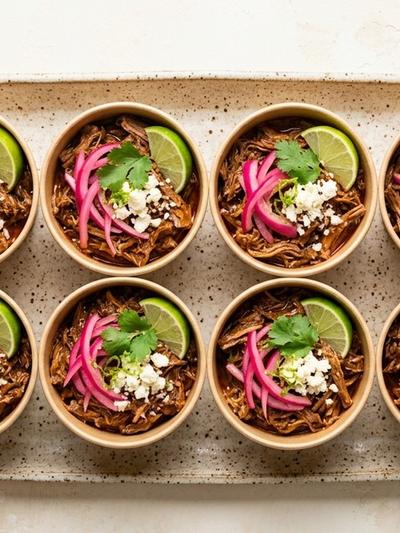
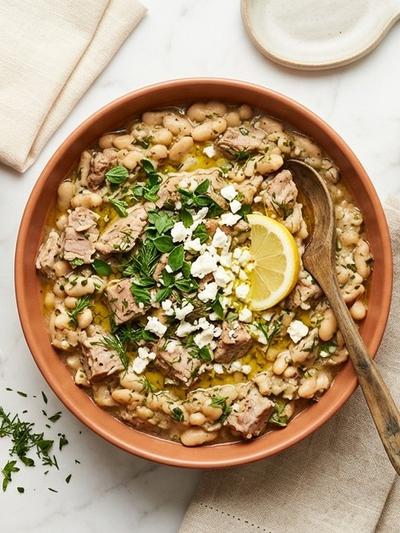
This slow cooker beef and artichoke spread delivers 27 grams of protein per serving in a portion that clocks in at just 225 calories. Lean top round simmers alongside artichoke hearts and cannellini beans until the beef practically shreds itself, creating a warm, chunky spread that works as a satisfying afternoon snack or a make-ahead grab from the fridge. Sun-dried tomatoes, oregano, and a bright finish of lemon zest and crumbled feta give it a distinctly Mediterranean character without any heavy or greasy ingredients.
The beauty of this spread lies in the way the long braise transforms simple ingredients into something greater. The artichoke hearts break down into a silky base, the white beans dissolve into the edges and add body, and the beef shreds into rich, savory threads that hold all of those flavors together. A hit of feta stirred in at the end adds just enough salt and tang to make you reach for another cucumber round, while the lemon zest keeps everything from tasting heavy or one-dimensional.
For anyone on GLP-1 medication, this spread solves a practical problem: finding snacks that are genuinely high in protein without requiring a full meal's worth of volume. A quarter-cup scoop on a few cucumber rounds or bell pepper strips is all you need. The slow cooker does the work on a weekend afternoon, and you portion the spread into containers for the week ahead.
Why This Works on GLP-1
Preserving lean muscle mass is one of the most important nutritional priorities during GLP-1-assisted weight loss. At 27 grams of protein per snack-sized serving, this spread covers more than a third of many people's daily protein target in a single, small portion. For anyone on Wegovy or a similar semaglutide medication, the reduced appetite that comes with treatment can make it genuinely difficult to reach adequate protein intake at mealtimes alone. A protein-dense snack like this one fills the gap without requiring a large volume of food, which matters when your stomach signals fullness much sooner than it used to.
The artichoke hearts and cannellini beans contribute 5 grams of gentle, soluble fiber per serving. This is the kind of fiber that supports steady digestion rather than causing the bloating or discomfort that large servings of raw vegetables or high-fiber cereals can trigger. For Mounjaro users especially, who often experience slowed gastric emptying in the early weeks of treatment, a soft, well-cooked fiber source tends to sit far more comfortably than crunchy, raw alternatives.
The slow-cooking method itself is a nutritional advantage here. The long, low-heat braise renders out excess fat from the beef while keeping the meat tender enough to shred and digest easily. At just 7 grams of fat per serving, this spread avoids the heavy, greasy quality that can trigger nausea in GLP-1 users, while still delivering the richness and flavor depth that makes a snack feel worth eating.
Ingredients (serves 4)
For the slow cooker:
- 12 oz (340g) lean beef top round, cut into 2-inch (5cm) chunks
- 1 can (14 oz / 400g) artichoke hearts in water, drained and roughly chopped
- 1/2 cup (90g) canned cannellini beans, drained and rinsed
- 3 cloves garlic, smashed
- 2 tablespoons (15g) dry-packed sun-dried tomatoes, finely chopped
- 1/2 cup (120ml) low-sodium beef broth
- 1 teaspoon dried oregano
- 1/2 teaspoon dried thyme
- 1/4 teaspoon red pepper flakes
- 1/4 teaspoon fine sea salt
- 1/4 teaspoon black pepper
For finishing:
- 1.5 oz (42g) feta cheese, crumbled
- 3 tablespoons (45g) plain Greek yogurt (0% fat)
- 1 tablespoon (15ml) fresh lemon juice
- 1 teaspoon lemon zest
- 1 tablespoon fresh parsley, finely chopped
For serving:
- Cucumber rounds, bell pepper strips, celery sticks, or whole-grain pita triangles
Instructions
Load the slow cooker:
- Arrange the beef chunks in a single layer on the bottom of the slow cooker insert. This ensures even heat distribution and helps the meat break down uniformly rather than clumping together.
- Scatter the chopped artichoke hearts, cannellini beans, smashed garlic, and sun-dried tomatoes over the beef.
- Sprinkle the oregano, thyme, red pepper flakes, salt, and pepper evenly across the surface.
- Pour the beef broth down the side of the insert so it reaches the bottom without washing the seasonings off the ingredients.
Slow cook:
- Cover and cook on HIGH for 3.5 to 4 hours, or on LOW for 7 to 8 hours. The beef is ready when it shreds easily with two forks and the artichoke hearts have softened to a near-paste consistency.
- Using two forks, shred the beef directly in the slow cooker. Press some of the softened artichoke hearts and beans against the side of the insert with a wooden spoon to create a chunky, spreadable base. You want a mix of shredded meat threads and creamy vegetable paste, not a uniform purée.
Finish and serve:
- Turn off the slow cooker. Stir in the crumbled feta, Greek yogurt, lemon juice, and lemon zest. The residual heat will soften the feta slightly without melting it completely, which gives the spread pockets of tangy salt throughout.
- Taste and adjust seasoning. The feta adds saltiness, so you may not need additional salt.
- Scatter the fresh parsley over the top. Serve warm with cucumber rounds and pepper strips, or portion into four airtight containers for the week.
Nutrition per Serving
| Nutrient | Amount (approx.) |
|---|---|
| Calories | ~225 kcal |
| Protein | ~27g |
| Fat | ~7g |
| Carbohydrates | ~12g |
| Fiber | ~5g |
Estimates based on 93% lean beef top round, canned artichoke hearts in water, canned cannellini beans, and reduced-fat feta. Serving includes the spread only — vegetable dippers are additional.
Practical Notes
Portion into snack containers immediately. Divide the finished spread into four small containers while it is still warm, before the feta sets. This makes weekday snacking effortless. Pair each container with a small bag of pre-cut vegetables, and you have a complete, grab-and-go protein snack that requires no thought or preparation during the week.
Store and reheat safely. The spread keeps well in the refrigerator for up to 5 days and freezes for up to 2 months. It thickens considerably when cold, which actually makes it easier to scoop onto cucumber rounds. To reheat, microwave a single portion for 45 to 60 seconds, stirring halfway through. A splash of broth loosens it if needed.
Swap the dippers to match your tolerance. In the early weeks of GLP-1 treatment, raw vegetables can sometimes feel difficult to digest. If that is the case, try spreading this on lightly toasted whole-grain pita triangles or thin rice cakes instead. The softer texture pairs well with the chunky spread and may sit more comfortably in a sensitive stomach.
Use sirloin tip as an alternative cut. If top round is unavailable, lean sirloin tip works identically in the slow cooker. Avoid fattier cuts like chuck, which will produce a greasier spread that does not suit GLP-1 digestion. Whichever cut you choose, trimming any visible fat before cooking keeps the final product lean.
Double the batch without adjusting the time. This recipe scales easily. Use a 6-quart slow cooker and double all ingredients. The cook time stays the same as long as the beef is in a single layer on the bottom. A double batch yields 8 snack portions, easily covering a full work week plus a couple of extras.
Frequently Asked Questions
How much of this spread should I eat per snack on GLP-1 medication?
Can I use ground beef instead of top round?
How long does this spread last in the fridge and freezer?
What if my appetite is too small for even a full snack portion?
Can I make this on the stovetop instead of in a slow cooker?
This article provides general food and nutrition guidance only. It does not constitute medical advice. Always consult your healthcare provider regarding your GLP-1 medication and individual nutritional needs.