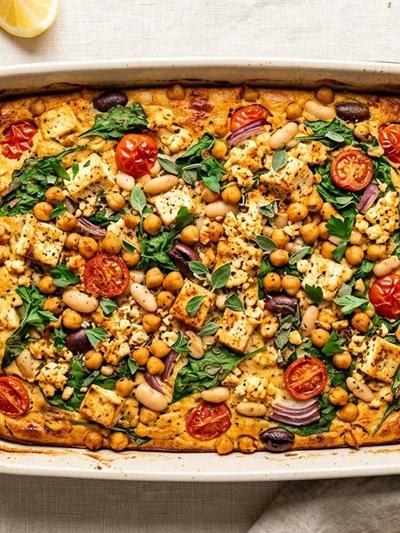
Each serving of this plant-based breakfast bake delivers 30 grams of protein from a triple-source combination of extra-firm tofu, black beans, and nutritional yeast — three ingredients that together provide all essential amino acids without a single egg or ounce of dairy. The 8 grams of fiber per slice come primarily from black beans and ground flaxseed, offering the kind of slow-release energy that keeps blood sugar steady through a long morning. A layer of par-baked shredded hash browns forms the crispy foundation, giving every square the starchy, golden crunch that makes breakfast actually feel like breakfast. You assemble one 9×13 pan on a Sunday afternoon and eat from it all week.
The flavor profile leans into classic American diner territory: turmeric turns the crumbled tofu a warm golden color, while smoked paprika and a splash of soy sauce build the kind of deep, savory backbone that usually requires bacon or sausage. Nutritional yeast contributes a subtle, almost cheesy umami that binds the whole scramble together without any actual cheese. Pockets of tender black beans, sweet red bell pepper, and wilted spinach give every bite genuine variety in both texture and taste.
For GLP-1 users, the meal-prep format eliminates the most common breakfast obstacle: low morning appetite paired with zero motivation to cook from scratch. Each square is calorie-dense enough to feel substantial in a small volume, yet moderate in fat so it sits gently in a stomach that may still be adjusting to medication. Reheating takes two minutes in the microwave, which means you eat something protein-rich even on mornings when the thought of standing at a stove would cause you to skip the meal entirely.
Why This Works on GLP-1
The 30 grams of protein per serving directly addresses the primary nutritional risk during GLP-1-assisted weight loss: losing lean muscle along with fat. When medications like Mounjaro significantly reduce your calorie intake, your body will break down muscle for energy unless protein consumption stays consistently high — research suggests at least 1.0 to 1.2 grams per kilogram of body weight daily. This bake makes hitting that target automatic. Grab a cold square from the fridge, reheat, and you have covered a third or more of your daily protein goal before the morning is over. The combination of soy protein from tofu and legume protein from black beans provides a complete amino acid profile comparable to animal sources, with leucine levels sufficient to trigger muscle protein synthesis.
The 8 grams of fiber per serving — drawn from black beans, ground flaxseed, and vegetables — promote gentle, progressive digestion rather than the rapid gastric movement that can trigger nausea on GLP-1 medications. Soluble fiber from flaxseed forms a gel-like consistency in the gut that slows glucose absorption, complementing the blood sugar regulation that Wegovy and similar drugs already provide. The spinach contributes meaningful iron and folate without adding the kind of raw-vegetable bulk that sometimes causes bloating in early treatment weeks.
The fat content stays moderate at 14 grams per serving, almost entirely from the tofu and flaxseed — both sources of unsaturated fats that support hormone function and nutrient absorption without the greasy heaviness of butter or cheese. Turmeric, responsible for the golden scramble color, contains curcumin, a compound with documented anti-inflammatory properties that may support gut comfort during medication adjustment. This is a breakfast engineered to work with your treatment, not against it.
Ingredients (serves 4)
For the hash brown base:
- 12 oz (340g) frozen shredded hash browns (not patty-style)
- Cooking spray
- 1/4 teaspoon salt
For the tofu scramble:
- 2 blocks (28 oz / 800g total) extra-firm tofu, drained and pressed
- 1 can (15 oz / 425g) black beans, drained and rinsed
- 3 cups (90g) baby spinach, roughly chopped
- 1 medium red bell pepper, diced (about 1 cup / 150g)
- 1 medium yellow onion, diced (about 1 cup / 150g)
- 3 cloves garlic, minced
- 1 tablespoon (15ml) olive oil
- 3 tablespoons (15g) nutritional yeast
- 2 tablespoons (14g) ground flaxseed
- 2 teaspoons soy sauce or tamari
- 1 teaspoon ground turmeric
- 1 teaspoon smoked paprika
- 1/2 teaspoon garlic powder
- 1/2 teaspoon onion powder
- 1/4 teaspoon black pepper
- Salt to taste
Instructions
Press the tofu and preheat the oven:
- Wrap each tofu block in a clean kitchen towel or several layers of paper towel. Place on a cutting board with a heavy skillet or pot on top. Press for at least 15 minutes — or overnight in the fridge if you plan ahead — to remove excess moisture. Dry tofu crumbles better and absorbs more seasoning.
- Preheat your oven to 400°F (200°C). Line a 9×13 inch (23×33 cm) baking dish with parchment paper, letting the edges hang over the sides for easy removal later.
Par-bake the hash brown base:
- Spread the frozen hash browns in an even layer across the bottom of the prepared dish. Press them down firmly with a spatula so they compact into a solid sheet — this creates the crispy crust that holds the bake together when you slice it. Spray lightly with cooking spray and sprinkle with 1/4 teaspoon salt.
- Bake for 15 minutes until the hash browns begin to turn golden and feel dry to the touch. They will not be fully crisp yet — the second bake finishes them.
Cook the scramble while the hash browns bake:
- While the hash browns are in the oven, heat the olive oil in a large skillet over medium heat. Add the diced onion and red bell pepper and cook for 4 to 5 minutes, stirring occasionally, until the onion turns translucent and the pepper softens.
- Add the minced garlic and cook for 30 seconds until fragrant.
- Crumble both pressed tofu blocks into the skillet in rough, uneven chunks — some pea-sized, some marble-sized. Uneven texture gives the finished bake more visual and textural interest than a uniform crumble.
- Sprinkle the turmeric, smoked paprika, garlic powder, onion powder, and black pepper over the tofu. Stir well and cook for 4 to 5 minutes, allowing the tofu to dry slightly and absorb the spices.
- Add the soy sauce, nutritional yeast, and ground flaxseed. Stir to combine. The mixture should look golden and smell deeply savory.
- Add the chopped spinach and stir until wilted, about 1 minute. Fold in the drained black beans. Taste and adjust salt — start with 1/4 teaspoon and add more if needed.
Assemble and bake:
- Remove the par-baked hash browns from the oven. Spread the tofu scramble mixture evenly over the hash brown layer, pressing down gently with the back of a spatula so everything makes firm contact.
- Return the dish to the oven and bake for 25 minutes until the edges are golden brown and the top feels set when pressed lightly.
- Remove from the oven and let the bake cool in the dish for 10 minutes. This resting period lets the squares firm up enough to hold their shape when cut. Use the parchment overhang to lift the entire bake onto a cutting board, then slice into 4 large squares or 8 smaller rectangles.
Nutrition per Serving
| Nutrient | Amount (approx.) |
|---|---|
| Calories | ~410 kcal |
| Protein | ~30g |
| Fat | ~14g |
| Carbohydrates | ~40g |
| Fiber | ~8g |
Estimates based on extra-firm tofu (Nasoya or equivalent), canned black beans drained, standard frozen shredded hash browns, and Bob's Red Mill ground flaxseed. Actual values vary by brand.
Practical Notes
Pressing tofu is not optional. Waterlogged tofu steams instead of crisping, resulting in a soggy bake that falls apart when sliced. If you are short on time, freeze the tofu blocks overnight and thaw them before pressing — previously frozen tofu releases water much faster and develops a chewier, more scramble-like texture.
Store and reheat for the week. Wrap each square individually in foil or place in separate airtight containers. Refrigerated squares keep well for 5 days. Reheat in the microwave for 90 seconds to 2 minutes, or place uncovered in a 375°F (190°C) oven for 10 minutes if you want to restore the hash brown crispness. These also freeze well for up to 2 months — thaw overnight in the fridge before reheating.
Add eggs for a protein boost. If you are not strictly plant-based and want to push the protein even higher, beat 2 to 3 eggs into the tofu scramble mixture before spreading it over the hash browns. This adds roughly 6 grams of protein per serving and helps bind the bake into firmer slices.
Swap the hash browns for sweet potato. Grate one large sweet potato (about 12 oz / 340g) on the large holes of a box grater, squeeze out excess moisture in a clean towel, and use it in place of the frozen hash browns. Par-bake the same way. This adds beta-carotene and slightly more fiber while keeping the crispy-base structure intact.
Start small if your appetite is very low. Cut the bake into 8 rectangles instead of 4 large squares. A half-portion still delivers roughly 15 grams of protein and 200 calories — enough to count as a meaningful breakfast on days when a full serving feels like too much. You can always eat a second piece an hour later if hunger returns.
Frequently Asked Questions
Will this bake cause nausea on GLP-1 medications?
Can I use a different protein source instead of tofu?
How long do the meal-prepped squares last in the fridge?
What if I can only eat very small portions in the morning?
Do I need to thaw the hash browns before using them?
This article provides general food and nutrition guidance only. It does not constitute medical advice. Always consult your healthcare provider regarding your GLP-1 medication and individual nutritional needs.