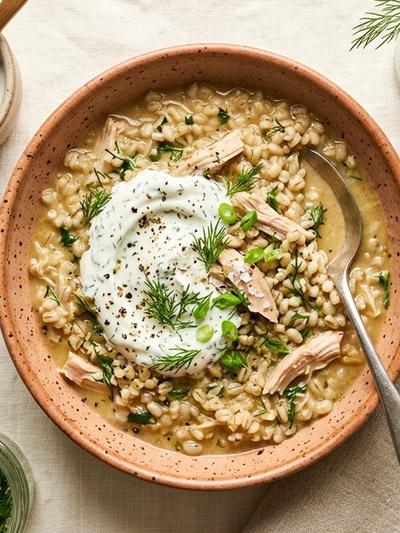
Each serving of these overnight cheddar grits delivers roughly 39 grams of protein from three complementary sources: chicken breast, sharp cheddar, and a poached egg. Stone-ground grits provide slow-digesting complex carbohydrates and a modest 2 grams of fiber, while the red bell pepper adds vitamin C and a touch of natural sweetness. At approximately 375 calories per bowl, the macros land in a range that supports muscle preservation without overwhelming a reduced appetite.
The flavor here is pure Southern comfort. Stone-ground grits develop a deep corn sweetness during the overnight cook, absorbing smoky paprika and garlic from the broth. Shredded chicken folds into the creamy base, and sharp cheddar melts through every spoonful. A soft poached egg on top breaks into the grits like a built-in sauce, rich and silky without any added cream or butter.
This is a genuine set-it-and-forget-it breakfast. You assemble the slow cooker in under ten minutes before bed, and the entire dish is waiting when you wake up. For GLP-1 users who struggle with morning appetite, having a warm, ready-made meal removes the friction that leads to skipping breakfast altogether. The soft texture of the grits is gentle on digestion, and the modest portion size fits comfortably even on low-appetite mornings.
Why This Works on GLP-1
Protein intake matters more during GLP-1-assisted weight loss than in typical dieting because the rapid caloric reduction can accelerate muscle loss. This bowl provides 39 grams of complete protein from chicken breast, egg, and cheddar, which collectively deliver all essential amino acids in bioavailable forms. For people on Mounjaro or similar GLP-1 receptor agonists, hitting 25 to 40 grams of protein at breakfast sets a foundation that helps protect lean mass throughout the day. Starting the morning with this level of protein also promotes sustained satiety, which complements the appetite-suppressing effects of the medication rather than working against them.
Stone-ground grits digest more slowly than instant or quick-cook varieties because they retain the whole corn germ and hull fragments. This means a gentler, more gradual blood sugar response compared to refined breakfast carbohydrates like white toast or sugary cereal. The soft, porridge-like consistency is also easy on a digestive system that may be more sensitive during the early weeks of Zepbound or other GLP-1 treatments, when nausea and bloating are most common.
The overnight slow cooker method eliminates morning decision fatigue, which is a genuine obstacle for people whose medications have shifted their relationship with food. When breakfast requires zero effort, you are far more likely to eat it. The warm temperature also helps with tolerance, as many GLP-1 users report that warm, soft foods sit better than cold or crunchy options during periods of reduced appetite.
Ingredients (serves 4)
For the slow cooker grits:
- 3/4 cup (128g) stone-ground grits (not instant or quick-cook)
- 3 cups (710ml) low-sodium chicken broth
- 1/2 cup (120ml) water
- 1 lb (450g) boneless, skinless chicken breast
- 1/2 medium yellow onion, finely diced (about 3/4 cup / 90g)
- 1 medium red bell pepper, diced (about 1 cup / 150g)
- 2 cloves garlic, minced
- 1 teaspoon smoked paprika
- 1/2 teaspoon garlic powder
- 1/2 teaspoon kosher salt
- 1/4 teaspoon black pepper
For finishing:
- 2 oz (55g) sharp cheddar cheese, shredded
- 4 large eggs
- 1 tablespoon white vinegar (for poaching)
- 2 green onions, thinly sliced
- Hot sauce, for serving (optional)
Instructions
Prepare the slow cooker (evening, about 10 minutes):
Lightly grease the inside of a 4- to 6-quart slow cooker with cooking spray. This prevents the grits from sticking to the ceramic walls during the long cook, which makes cleanup much easier.
Add the stone-ground grits, chicken broth, and water to the slow cooker. Stir in the diced onion, red bell pepper, minced garlic, smoked paprika, garlic powder, salt, and black pepper. The extra water accounts for overnight evaporation. Stone-ground grits absorb more liquid than instant varieties, so the mixture will look very loose at this stage.
Place the chicken breasts on top of the grits mixture in a single layer. Do not submerge them. Resting on the surface allows the chicken to steam-cook gently rather than disintegrate into the porridge, which keeps the texture intact for shredding later.
Cover and cook on low for 7 to 8 hours. If your slow cooker runs hot, set a timer for 7 hours and check the consistency. The grits should be thick and creamy, and the chicken should register at least 165°F (74°C) internally.
Finish and serve (morning, about 10 minutes):
Transfer the chicken breasts to a cutting board. Use two forks to shred the meat into bite-sized pieces. The chicken will be very tender and pull apart easily.
Stir the grits vigorously to smooth out any lumps that formed during the overnight cook. Fold in the shredded chicken and the sharp cheddar cheese, stirring until the cheese is fully melted and distributed. Taste and adjust salt if needed.
Poach the eggs while the cheese melts. Bring a medium saucepan of water to a gentle simmer, add the white vinegar, and create a slow swirl with a spoon. Crack each egg into the water one at a time and cook for 3 to 4 minutes until the whites are set but the yolks remain runny. Remove with a slotted spoon and drain briefly on a paper towel.
Divide the grits among four bowls. Top each with a poached egg, sliced green onions, and hot sauce if desired. Serve immediately while the grits are still creamy.
Nutrition per Serving
| Nutrient | Amount (approx.) |
|---|---|
| Calories | ~375 kcal |
| Protein | ~39g |
| Fat | ~13g |
| Carbohydrates | ~27g |
| Fiber | ~2g |
Estimates based on Bob's Red Mill stone-ground grits, standard boneless skinless chicken breast, large eggs, and sharp cheddar cheese. Actual values may vary by brand and portion size.
Practical Notes
Stone-ground grits are non-negotiable here. Instant or quick-cook grits will turn to paste during an 8-hour cook. Stone-ground varieties hold their texture and develop a deeper corn flavor overnight. Bob's Red Mill and Anson Mills are widely available options. If you can only find quick-cook grits, reduce the cook time to 3 to 4 hours on low.
Meal prep the grits base for up to 3 days. Portion the finished grits and chicken into airtight containers and refrigerate. They will thicken considerably as they cool. Reheat in the microwave with a splash of broth or water, stirring halfway through, until creamy again. Poach fresh eggs each morning for the best texture and food safety.
Start with a half portion if your appetite is very low. Many GLP-1 users find that mornings are their lowest-appetite window. A half serving still provides about 20 grams of protein, which is a solid start to the day. You can always eat the rest an hour or two later when hunger returns.
Swap the poached egg for scrambled if poaching intimidates you. The protein count stays the same. Scramble the egg in a nonstick pan with a light spray of oil and pile it on top of the grits. Fried eggs with a runny yolk work well too, though they add a small amount of extra fat from the cooking oil.
Boost the vegetables for more volume without many extra calories. Stir in a handful of fresh baby spinach or chopped kale when you add the cheddar in the morning. The residual heat will wilt the greens in about a minute and adds some extra vitamins without changing the character of the dish.
Frequently Asked Questions
Can I use chicken thighs instead of breast for more flavor?
Is this recipe safe to leave in the slow cooker for longer than 8 hours?
How should I store and reheat leftovers?
What if I have very little appetite in the early weeks of my GLP-1 medication?
Can I make this in a programmable Instant Pot on the slow cook function?
This article provides general food and nutrition guidance only. It does not constitute medical advice. Always consult your healthcare provider regarding your GLP-1 medication and individual nutritional needs.