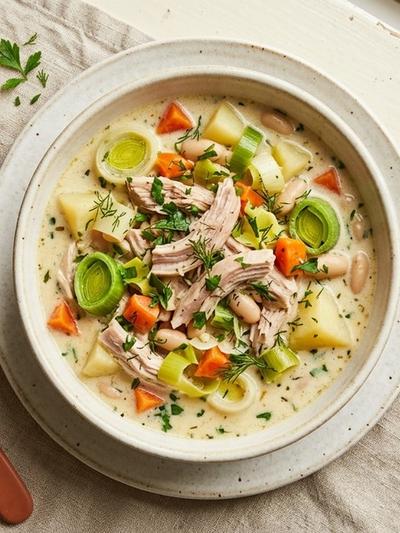
Each serving of this overnight porridge delivers 36 grams of protein and 9 grams of fiber from a simple combination of chicken breast, pearl barley, root vegetables, and frozen peas. The barley provides beta-glucan soluble fiber — the same heart-healthy compound that makes oats a breakfast staple — while the chicken poaches to fork-tender perfection in the slow cooker without any attention from you. It is a complete, balanced breakfast that assembles in fifteen minutes the night before.
Scandinavian cooking leans into clean, direct flavors, and this porridge follows that tradition. Pearl barley simmers into a creamy, slightly chewy base that absorbs the savory chicken broth, while leeks and carrots melt into the background and add natural sweetness. Fresh dill, stirred in at the end and folded into a cool yogurt topping, lifts the entire bowl with its bright, grassy bite — the same herb-and-grain pairing that defines so much of Nordic home cooking.
For people on GLP-1 medications, the slow cooker format solves a real morning problem. When your appetite is low and cooking feels like too much effort, having a warm, protein-rich breakfast ready the moment you wake up removes the friction entirely. The soft, porridge-like texture is gentle on a slower-moving digestive system, and the moderate portion — roughly one and a half cups per serving — is filling without being overwhelming.
Why This Works on GLP-1
Preserving lean muscle mass is one of the most important nutritional goals during GLP-1-assisted weight loss, and that requires consistent protein intake at every meal — including breakfast, which is often the meal people skip or undereat. This porridge provides 36 grams of complete protein per serving, almost entirely from chicken breast poached directly in the slow cooker. For anyone on Wegovy or Mounjaro, reaching that protein threshold at breakfast means you start the day with the building blocks your muscles need, rather than playing catch-up at dinner.
The 9 grams of fiber per serving come from two complementary sources: pearl barley and frozen peas. Pearl barley is unusually rich in beta-glucan, a soluble fiber that forms a gel-like consistency during digestion. This slows glucose absorption and promotes steady energy — a useful complement to the blood sugar improvements that Ozempic and similar GLP-1 medications already provide. The peas add a gentler insoluble fiber that supports regularity without causing the bloating that high-fiber vegetables sometimes trigger in sensitive stomachs.
At 388 calories and just 8 grams of fat, this bowl sits in the caloric sweet spot for a GLP-1 breakfast: substantial enough to sustain you through the morning, lean enough to leave room in your daily budget. The carbohydrates come entirely from whole food sources — barley, carrots, leeks, peas — with no added sugars or refined grains, which means you get sustained energy rather than a spike-and-crash cycle.
Ingredients (serves 4)
For the porridge:
- 1 lb (454g) boneless, skinless chicken breast
- 3/4 cup (150g) pearl barley, rinsed under cold water
- 4 cups (960ml) low-sodium chicken broth
- 2 medium carrots, finely diced (about 1 cup / 130g)
- 1 large leek, white and light green parts only, thinly sliced (about 1 cup / 120g)
- 2 stalks celery, finely diced (about 1/2 cup / 80g)
- 1 tablespoon (14g) unsalted butter
- 1 bay leaf
- 1/2 teaspoon white pepper
- 1/2 teaspoon fine sea salt
Added in the morning:
- 2/3 cup (100g) frozen peas
- 2 tablespoons fresh dill, chopped
For the dill yogurt:
- 1/3 cup (80g) plain Greek yogurt (2% fat)
- 2 tablespoons fresh dill, finely chopped
- 1 teaspoon fresh lemon juice
- Pinch of fine sea salt
To serve:
- Fresh dill sprigs
- Freshly ground black pepper
- Lemon wedges (optional)
Instructions
Prep the slow cooker (night before):
- Place the rinsed pearl barley in the bottom of a 4- to 6-quart slow cooker. Barley goes in first so it sits in the most liquid and cooks evenly overnight.
- Scatter the diced carrots, sliced leek, and celery over the barley. These vegetables will break down during the long cook, thickening the porridge and adding natural sweetness without any added sugar.
- Season the chicken breast on both sides with the salt and white pepper. Nestle the chicken on top of the vegetables — keeping it on top prevents it from sitting in the barley and becoming gummy.
- Drop in the bay leaf and the tablespoon of butter. Pour the chicken broth over everything. The liquid should just cover the chicken. If your slow cooker runs hot, add an extra half cup of water to prevent the porridge from drying out.
- Cover and cook on LOW for 7 to 8 hours. If you need it faster, cook on HIGH for 3.5 to 4 hours, though the overnight low method produces the creamiest barley.
Finish in the morning:
- Remove the chicken breast and transfer it to a cutting board. It will be fall-apart tender. Use two forks to shred it into bite-sized pieces. Discard the bay leaf.
- Stir the porridge well — the barley will have absorbed most of the liquid and thickened into a creamy consistency. If it seems too thick, stir in a few tablespoons of hot water or broth until you reach your preferred texture.
- Add the frozen peas directly to the hot porridge and stir. They will thaw and warm through in about two minutes from the residual heat — no need to cook them further.
- Fold the shredded chicken back into the porridge along with the two tablespoons of chopped dill. Stir gently to distribute evenly.
Make the dill yogurt:
- In a small bowl, stir together the Greek yogurt, finely chopped dill, lemon juice, and a pinch of salt. This takes about thirty seconds and can be done while the peas warm through.
Serve:
- Ladle the porridge into bowls. Top each with a generous spoonful of dill yogurt, a few fresh dill sprigs, a crack of black pepper, and a lemon wedge on the side if desired. The contrast between the warm, creamy porridge and the cool, tangy yogurt is what makes this breakfast work.
Nutrition per Serving
| Nutrient | Amount (approx.) |
|---|---|
| Calories | ~388 kcal |
| Protein | ~36g |
| Fat | ~8g |
| Carbohydrates | ~36g |
| Fiber | ~9g |
Calculated using USDA values for raw boneless skinless chicken breast, dry pearl barley, frozen green peas, and 2% Greek yogurt. Actual values may vary slightly based on specific brands and chicken breast size.
Practical Notes
Store and reheat for weekday breakfasts. This porridge refrigerates well in individual airtight containers for up to four days. Reheat portions in the microwave with a splash of chicken broth or water — the barley continues to absorb liquid as it sits, so you will need to thin it slightly each morning.
Adjust the texture to your comfort level. If you are in the early weeks of Zepbound or another GLP-1 medication and find thick porridge difficult, add more broth when reheating to create a thinner, soup-like consistency. A looser porridge is easier on a sensitive stomach while still delivering the same protein and fiber.
Swap the chicken for what you have. Boneless, skinless chicken thighs work in the same quantities and produce a slightly richer result with about 2 additional grams of fat per serving. Turkey breast is another direct swap at nearly identical macros.
Do not skip the rinsing step for barley. Rinsing pearl barley under cold water for thirty seconds removes surface starch that would otherwise make the porridge gluey rather than creamy. This small step makes a noticeable difference in the final texture.
Use the lemon strategically. A squeeze of lemon juice over the finished bowl does more than add flavor — the acidity brightens the entire dish and can help stimulate appetite on mornings when eating feels like a chore. Many GLP-1 users find that a touch of citrus makes early-morning meals more appealing.
Frequently Asked Questions
Can I use quick-cooking barley instead of pearl barley?
I am on Mounjaro and have very little morning appetite. How should I approach this?
Can I freeze individual portions?
What can I use instead of leeks?
Can I add an egg on top for extra protein?
This article provides general food and nutrition guidance only. It does not constitute medical advice. Always consult your healthcare provider regarding your GLP-1 medication and individual nutritional needs.